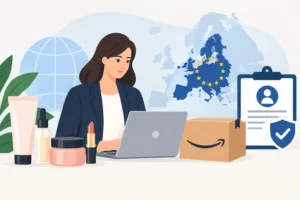
Setting up an EU company is not the only way to get compliant enough to sell on Amazon Europe. An EU distributor for Amazon Europe can sometimes let a US brand launch without forming its own EU legal entity, but that depends on how the distributor, inventory, importer, and VAT responsibilities are structured, not on the relationship alone. Done right, it still gets you selling faster than building an EU entity from scratch.
This guide is for US brand owners who already work with a European distribution partner, or are close to signing one, and want a clear picture of what that partner can legally cover, and what still falls on you.
Why Speed to Market Matters When Expanding to Amazon Europe
Every month spent setting up a legal entity, VAT registration, or import structure is a month a competitor spends building reviews, ranking, and repeat customers in your category. EU small businesses selling on Amazon generated a record €40 billion in sales in 2025, and compliance costs, not customer demand, are consistently what slows new entrants down the most.
For a US brand, the fastest legitimate way to remove that bottleneck is often already sitting in your supply chain: an existing EU distributor for Amazon Europe. Getting the market entry strategy right from day one determines whether that early speed advantage holds up past the first few months.
Using an EU Distributor for Amazon Europe: How It Works
An EU distributor for Amazon Europe isn’t just a logistics contact, it’s a European-based, VAT-registered business that can take on legal responsibilities a US brand owner can’t take on alone. Before you build a launch plan around one, you need to know exactly which responsibilities they can cover and which ones stay with you.
What Your EU Distributor Can (and Can’t) Do for You
A distributor with an existing EU footprint can typically:
- Act as the importer of record for EU-bound shipments, if it’s contractually and operationally responsible for the import, using its own EORI number
- Hold your inventory locally, cutting the delay of shipping from the US for every order
- Handle the first round of customs clearance and paperwork under a distributor agreement Amazon Europe sellers commonly use
- Provide an EU-established business address where required for specific marketplace, tax, customs, or product-compliance purposes
What they usually can’t do without a separate, written agreement:
- Automatically become your EU authorised representative or GPSR responsible person, these are distinct roles that must be formally assigned in writing, not something a distributor takes on by default
- Absorb your ongoing VAT registration obligations once your own inventory or sales structure triggers them
- Guarantee the brand control that comes with running your own Amazon Seller Central account
Working through a distributor can change which VAT registrations apply, but it doesn’t eliminate your VAT obligations, those depend on who owns the inventory, where it’s stored, and who makes the sale, not on how much you sell.
EU Distributor vs Your Own EU Entity vs an Importer of Record Service
| Route | Setup speed | Ongoing cost | Brand control | VAT complexity |
| Existing EU distributor | Fastest, weeks | Low to moderate | Shared | Lower at first |
| Your own EU entity | Slowest, months | High | Full | Highest |
| Dedicated importer of record service | Fast, weeks | Moderate to high | Full | Depends on your VAT and inventory structure |
A distributor can simplify the initial setup, but your actual VAT requirements still depend on that underlying structure, not on the route itself.
For most US brands testing demand before committing further, choosing an EU distributor for Amazon Europe wins on speed without the full cost of building an EU entity from scratch.
Getting Your Distributor’s Inventory Into Amazon Europe
Once your distributor is set up as importer of record, you still need a plan for moving that inventory into Amazon’s fulfillment network, the import step and the fulfillment step are two different things. Most US brands using an EU distributor for Amazon Europe start with the distributor receiving and holding stock locally, then shipping it into Amazon fulfillment centers as a standard FBA inbound shipment.

From there, the choice between EFN and Pan-European FBA matters. EFN keeps your inventory in the single country where your distributor is based and lets Amazon ship it across Europe from that one location, which keeps VAT registration simpler while you’re still relying on the distributor relationship. Pan-European FBA spreads inventory across multiple Amazon fulfillment centers for faster local delivery, but it usually triggers VAT registration in more countries, often sooner than a distributor-only setup can comfortably support.
Common Mistakes US Brands Make When Relying on an EU Distributor
Before you lock in an EU distributor for Amazon Europe, watch for these recurring mistakes:
- Assuming the distributor agreement automatically covers GPSR and product safety documentation, it usually doesn’t
- Treating an exclusive distributor Amazon EU arrangement as a permanent substitute for VAT registration, the real trigger is usually where your inventory is stored and who makes the sale, not a sales threshold
- Not confirming in writing who owns the Amazon Seller Central account and who controls pricing
- Skipping a written exit clause, leaving the brand exposed if the distributor relationship ends
- Assuming Amazon Vendor Central and Seller Central have the same distributor requirements, they don’t
For a broader view of the full expansion process beyond the distributor piece, VAT, fulfillment choice, and localization, see our complete guide to expanding an Amazon brand to Europe.
How to Vet an EU Distributor Before You Sign
Not every distributor that can move product is actually set up to support an Amazon Europe launch. Start with the basics: do they hold a live EU VAT registration, and do they handle customs clearance themselves rather than outsourcing it quietly? Ask directly whether they’re willing to act as importer of record in writing, using an EORI number they actively use not one that sits idle on paper.
Then look past logistics. Confirm whether they can also serve as your EU authorised representative under GPSR, since that’s a separate legal role many distributors assume is covered when it isn’t. Ask about their track record with Amazon specifically, since Vendor Central and Seller Central carry different documentation requirements. Get a clear, written position on who owns the Seller Central account and controls pricing once you’re live, and don’t sign anything without a written exit clause that lets you walk away without losing your listings or reviews.
Product safety is rarely the only requirement in play. See how it fits alongside VAT, EPR and category claims in our Amazon EU compliance guide.
Deciding to expand is one thing; sequencing the markets, registrations and listings so they hold together is another. That is what we do on Amazon Europe expansion projects.
Why Bulgaria Works as an EU Entry Point for Non-EU Brands
Bulgaria rarely comes up in expansion plans, but for brands manufacturing outside the EU, especially in Türkiye and the wider region, it ticks more practical boxes than the markets people usually think of first.
- EU member since 2007: goods that are registered, taxed and distributed correctly through Bulgaria move freely across the EU single market.
- A Bulgarian entity can provide VAT registration, a Responsible Person address for cosmetics and the legal standing to contract with EU retailers and distributors.
- Low operating costs: a flat 10% corporate tax rate, and according to Eurostat the lowest labour costs in the EU in 2023.
- Short road lead times from Türkiye (Istanbul to Sofia is about 550 km), and a growing base of 3PL and e-commerce fulfilment providers around Sofia and Plovdiv.
Three Ways to Use an EU Base
1. Work with a distributor
The distributor buys the stock, handles import, compliance, storage and sales, and acts as Responsible Person where needed. It is the least setup for the brand but also the least control: margin is shared and the brand’s presence depends on the distributor’s priorities. On Amazon this works best when one authorised distributor controls the listings and the price.
2. Supply EU wholesalers on a B2B basis
The EU buyer handles import duties, VAT and onward distribution. It keeps the brand at arm’s length from EU regulation but limits direct relationships with retailers and shoppers, so it suits commodity-style products more than brands building a consumer identity.
3. Own entity with local fulfilment
The brand sets up an EU entity or works through a registered agent, ships stock in bulk to an EU warehouse and fulfils customers across the EU from there. It keeps full control of pricing, marketing and customers, and VAT runs through the EU entity. It takes the most setup but builds infrastructure for long-term growth across several markets.
Vetting a distributor takes time, and not every brand wants to run that process. The alternative is to work with a partner that already is one: we act as an authorised distributor and brand-control partner, buying the stock, owning the listings and carrying the P&L ourselves.
Conclusion
An EU distributor for Amazon Europe is a strong way to launch fast, not a permanent substitute for getting your own compliance right. Use it to accelerate your launch while confirming your long-term VAT, GPSR, and compliance responsibilities up front, then plan the transition to more direct control as volume grows.
Structuring an EU distributor for Amazon Europe relationship, or deciding when to move past one, is exactly the kind of decision that benefits from outside eyes. Book a free Amazon Europe expansion consultation and we’ll map out the fastest compliant path for your brand.
FAQs
1. Do I need an EU company to sell on Amazon Europe?
Not necessarily. A US brand can sometimes sell on Amazon Europe without EU company registration, depending on its selling, inventory, import, and VAT structure. An EU distributor for Amazon Europe can be one way to structure the launch, but it doesn’t automatically remove every EU tax or compliance obligation.
2. Can my EU distributor act as the importer of record for my Amazon FBA shipments?
Potentially, yes. If the distributor is EU-established and the commercial and customs structure makes it the importer, it can handle importation under its own EORI number. Confirm this with your customs broker and document it explicitly in the distributor agreement, a contract clause alone doesn’t create legal importer status.
3. What’s the difference between an EU distributor and an EU authorised representative?
A distributor buys, holds, and moves your product. An EU authorised representative is a specific GPSR compliance role focused on product safety. The same company can do both, but only if the agreement says so in writing.
4. Is a distributor agreement enough, or do I still need VAT registration?
A distributor agreement alone isn’t enough, it can change which VAT registrations apply to your brand, but it doesn’t eliminate them. What you actually owe depends on who owns the inventory, where it’s stored, and who makes the sale to the end customer.
5. What happens to my Amazon Europe listings if the distributor relationship ends?
That depends entirely on who owns the Seller Central account and brand registry access, which is exactly why confirming this in writing before launch matters more than almost anything else in the agreement.