Selling hair care on Amazon sounds straightforward until your listing gets flagged, suppressed, or pulled entirely. For Turkish brands entering US and EU marketplaces, the risk comes down to one thing: your hair product claims . What you write on the listing, what you put in backend keywords, and even what appears on product images all count.
This guide breaks down exactly where the line is, what you can safely say, and how to rewrite listings that are sitting in a gray zone.
The Cosmetic vs. Drug Line: How the EU and US Draw It Differently
Before writing a single word of your listing, you need to understand how regulators define what your product is . That definition changes everything about which hair product claims are legal.
The core question is simple: does your product change how the body looks, or does it change how the body works? The answer determines whether you are selling a cosmetic or a drug, and that answer is not the same on both sides of the Atlantic.
EU Standard: Efficacy Without Mechanism
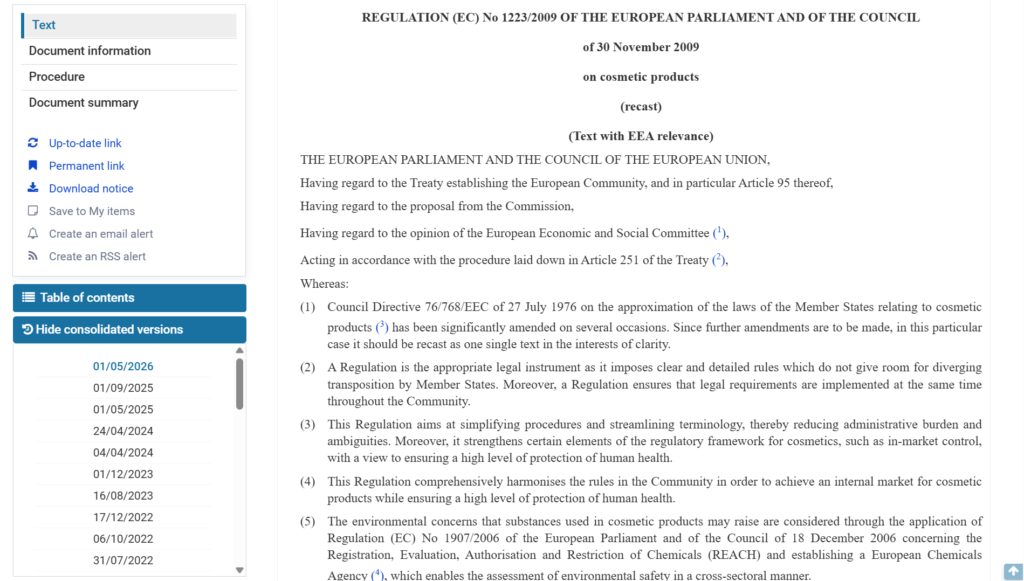
Under EU Cosmetics Regulation (EC) No 1223/2009, a cosmetic product is anything applied to the external parts of the body for cleaning, perfuming, changing appearance, or keeping those parts in good condition. The regulation allows efficacy-based hair product claims, as long as they do not imply a biological or physiological mechanism inside the body.
You can say your shampoo makes hair look thicker. You cannot say it stimulates cells in the follicle to produce thicker strands.
US/FDA Standard: Intended Use Determines Category
The FDA takes a different approach. Under US law, a product’s category is determined by its intended use, inferred from the label, the marketing copy, the website, and even customer reviews. If your product is intended to affect the structure or function of the body, it becomes a drug and needs approval.
This means a claim like “promotes hair regrowth” turns your shampoo into an unapproved drug the moment it appears on your Amazon listing.
The Difference Between Cosmetic and Drug Claims
| Claim Type | Cosmetic (Allowed) | Drug (Requires Registration) |
| Appearance | “Makes hair look fuller” | “Increases hair density” |
| Surface benefit | “Reduces the appearance of thinning” | “Stimulates follicle activity” |
| Ingredient function | “Enriched with biotin” | “Biotin activates hair follicles” |
| Scalp | “Soothes scalp dryness” | “Treats scalp conditions causing hair loss” |
| Breakage | “Strengthens hair against breakage” | “Repairs hair follicle damage” |
The pattern is consistent across both markets: cosmetic hair product claims describe what you see, drug claims describe what happens inside the body.
What Turkish Hair Brands CAN Claim on Amazon
The good news is there is a lot of room to work with. These categories are consistently accepted across both Amazon US and EU, as long as the language stays on the surface.
Two principles apply to every safe hair product claim: it must be verifiable through appearance or texture, and it must not imply a physiological change.
Thickness and Fullness Claims
Visual fullness claims are among the safest options. Language like “adds volume,” “creates the appearance of thicker hair,” and “gives hair a fuller look” all work because they describe aesthetics, not biology.
What to avoid: “increases hair shaft diameter,” “thickens each strand at the follicle level,” or anything implying a structural change to the hair itself.
Breakage Reduction Claims
Breakage claims are allowed when they focus on external strength. “Helps reduce breakage,” “strengthens hair against everyday damage,” and “makes hair more resistant to snapping” are all acceptable hair product claims.
The line breaks when you attribute the benefit to cellular repair. “Repairs hair follicle damage” or “rebuilds hair from the root” moves into drug territory.
Scalp Health Claims (Surface-Level Benefits)
Scalp claims are tricky but workable. You can claim surface-level comfort: “soothes dry scalp,” “helps maintain a balanced scalp,” “reduces flaking.” These describe visible or tactile surface conditions.
What you cannot do: connect scalp health to hair growth. “A healthy scalp means more hair growth” sounds harmless, but it implies a biological mechanism. That alone is enough to trigger a review.
Ingredient-Based Claims
Naming ingredients is generally safe when you do not follow up with a mechanism claim. “Formulated with castor oil,” “contains keratin,” “with biotin and zinc” are all fine. Where brands get into trouble is the next sentence, where they explain what the ingredient does at a cellular or follicular level.
Forbidden Claims Without Drug Registration: The Red Lines
These are not gray areas. Any listing that includes the following on Amazon US or EU is at risk of deletion.
The challenge for Turkish brands is that many of these phrases are standard in domestic Turkish marketing. They read naturally and feel accurate. On an international Amazon marketplace, they cross the line.
Regrowth Claims
Any language suggesting hair will grow back, grow more, or grow faster is a drug claim. “Promotes hair regrowth,” “stimulates new hair growth,” and “encourages hair to grow back” all fall here. Even softened versions like “supports the conditions for regrowth” are risky because they imply a biological outcome.
Density Increase Claims
Claiming that the number of hairs on the scalp will increase, or that thinning areas will fill in, describes a physiological change. “Increases hair density,” “fills in thinning patches,” and “boosts hair count” are all outside the cosmetic boundary.
Follicle Regeneration Claims
Any mention of follicle activation, stimulation, or regeneration puts a product in drug territory. This includes “reactivates dormant follicles,” “stimulates the follicle,” and “nourishes the hair follicle for growth.” Even the word “follicle” in a growth context draws attention from Amazon’s review systems.
Backend Keywords Can Trigger Reviews
This is where many Turkish brands get caught off guard. Keywords in the backend search terms field are not visible to shoppers, but Amazon’s systems scan them. If your backend includes terms like “hair regrowth,” “alopecia treatment,” or “stop hair loss,” those terms trigger the same review process as front-end copy. Backend keywords are not a workaround, they are an extension of your listing.
How Amazon Enforces Claim Policy: Rufus AI and Manual Review Triggers
Amazon’s enforcement has become significantly more sophisticated. Understanding how it works helps you avoid accidental violations before they cost you an ASIN.
The system operates in layers, with automated detection running constantly and manual review triggered when the automated layer flags something.
Rufus AI Detection Layer
Rufus is Amazon’s AI-powered shopping assistant, and it also functions as a content analysis layer. It reads listings, images, A+ content, and backend data to understand what a product claims to do. If Rufus categorizes a hair product as making therapeutic hair product claims, it can automatically reassign the listing to a drug-adjacent browse node or flag it for review.
According to Amazon’s product compliance guidelines , listings that imply drug-like benefits without the appropriate regulatory documentation are subject to removal without prior notice.
Common Manual Review Triggers
Manual review is typically triggered by customer complaints, competitor reports, or automated flag escalations. Common triggers include: claims that mirror language used by FDA-approved hair loss treatments like minoxidil, customer reviews that describe medical outcomes, and product images showing before-and-after comparisons for hair density.
Listing Deletion vs. Account-Level Action
There is a meaningful difference between listing deletion and account-level action. Deletion removes a specific ASIN and can often be resolved by editing the listing. Account-level action is broader, and repeated violations across multiple ASINs accelerates escalation. Turkish brands running large catalogs should audit every listing, not just the ones that have already been flagged.
Why You Never Want Your Listing Near Minoxidil or Finasteride
Minoxidil and finasteride are FDA-approved drug treatments for hair loss. Being associated with them on Amazon, even accidentally, creates serious problems for your hair product claims and your account standing.
Search Result Co-Location Risk
If your listing appears in the same search results as minoxidil products, Amazon’s algorithm may begin treating your product as a comparable item. This increases the likelihood that your listing will be reviewed against drug claim standards rather than cosmetic ones.
Browse Node Misclassification
Landing in the wrong browse node can happen through keyword overlap or category errors during listing setup. If your product ends up in a node that contains drug products, it may be subject to automatic compliance requirements your product cannot meet.
Keyword Strategy to Reposition Your Listing
Avoid all terminology that appears on minoxidil or finasteride listings. Build your keyword strategy around cosmetic language: “hair care,” “volumizing treatment,” “scalp care routine,” “strengthening shampoo.” The goal is to signal clearly to both the algorithm and human reviewers that your product belongs in the beauty category, not the pharmaceutical one.
3 Safe Rewriting Templates Turkish Brands Can Use Right Now
These templates are ready to use. Swap in your specific ingredients or product benefits as needed.
Template 1: Hair Growth / Regrowth Claims
Original (flagged): “Promotes hair regrowth and stimulates dormant follicles.”
Safe version: “Formulated to support the look of fuller, healthier hair over time. With regular use, hair feels stronger and looks more voluminous.”
Template 2: Scalp / Follicle Health Claims
Original (flagged): “Nourishes follicles and creates conditions for new hair growth.”
Safe version: “Helps maintain a comfortable, balanced scalp environment. Leaves the scalp feeling clean and refreshed after each wash.”
Template 3: Hair Density / Hair Loss Claims
Original (flagged): “Increases hair density and reduces hair loss caused by thinning.”
Safe version: “Visibly reduces the appearance of thinning. Hair looks denser and feels thicker from root to tip.”
Claim rules are only part of what governs a beauty listing in Europe. The wider picture is in our Amazon EU compliance guide.
Claim wording is the single most common reason a beauty listing disappears. It is one of the things we handle as an Amazon agency for beauty and cosmetics brands.
Conclusion
Getting your hair product claims right is the difference between a listing that stays live and one that gets pulled on a busy sales day. For Turkish brands, the opportunity on Amazon is real, and the compliance risk is manageable once you know where the lines are. Stay in the cosmetic lane, write for what people see rather than what they hope happens inside, and audit both your front-end copy and backend keywords before every listing goes live.
1. Can I claim that my shampoo helps hair grow back on Amazon?
No. Claims about hair regrowth or stimulating hair growth are considered drug claims and may cause your listing to be removed.
2. What type of hair product claims are generally safe on Amazon?
Cosmetic claims such as “adds volume,” “reduces the appearance of thinning,” and “helps reduce breakage” are generally acceptable.
3. Do backend keywords need to follow Amazon’s claim policy?
Yes. Amazon reviews backend keywords as well, so terms like “hair regrowth” or “alopecia treatment” can trigger compliance issues even if shoppers cannot see them.