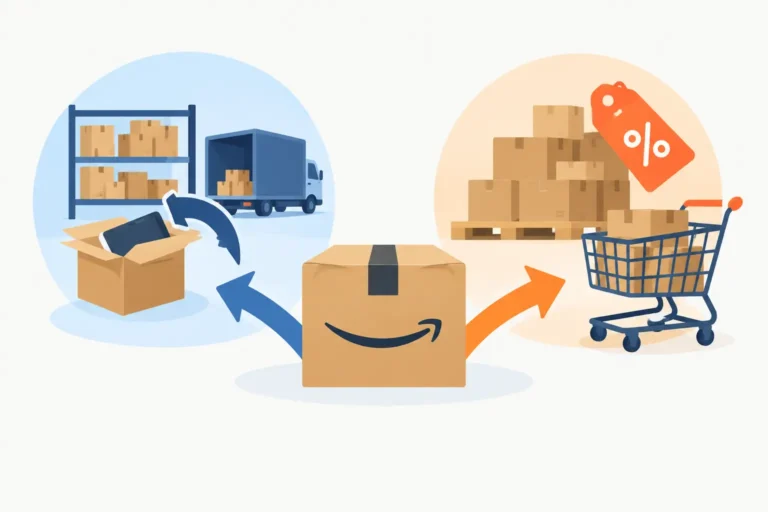
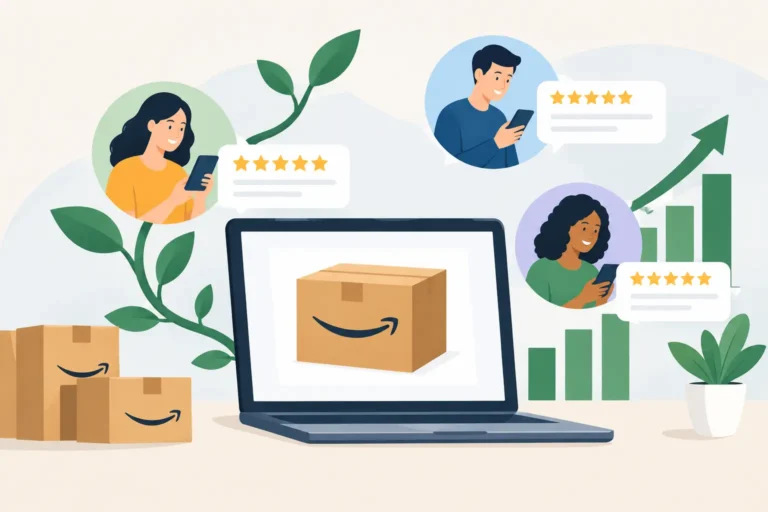
Amazon Sponsored TV ads launched in the US in October 2023 with an appealing promise: self-service streaming TV reach without buying a traditional TV media plan. For challenger brands, that can look like a route around the category giant that owns every expensive Sponsored Products placement. But a 30-second video impression does not repair a weak ASIN, an out-of-stock hero SKU, or a detail page that converts at half the rate it did 14 days ago.
The commercial question is not whether your brand should be on TV. It is whether you can turn a viewer’s later Amazon search, detail page visit, and order into profitable rank and repeat demand. If the answer is no, Sponsored TV can become a very polished way of donating traffic to the giants.
What Amazon Sponsored TV ads actually change
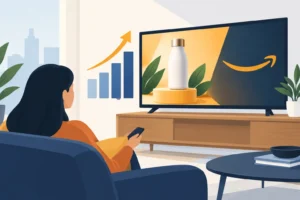
Sponsored TV is a streaming-TV format bought through the Amazon Ads console, not a replacement for search-led PPC. Sponsored Products appears when a shopper has shown intent through a search query or product page visit. Sponsored TV works earlier, placing video in streaming environments and relying on Amazon audience and contextual signals rather than a shopper typing a 3-word keyword. If you are weighing it against programmatic video, our breakdown of Amazon DSP advertising for brands covers what that route adds.
That difference changes the job of the campaign. A search campaign can win an order from a shopper comparing “vitamin C serum” at that moment. A TV campaign may cause that shopper to search your brand name 2 days later, click an organic result, and buy after seeing your main image, price, delivery promise, and review count. The Campaign performance report may record impressions, spend, and attributed sales, but it cannot turn a poor product proposition into a good one.
Treat it as a demand-creation layer with a retail execution test attached. Amazon introduced the format in 2023, but the underlying retail mechanics are older: shoppers still judge the offer at the ASIN level, and Amazon still learns from conversion, sales velocity, availability, and customer response. The video gets attention. The product detail page has to keep it.
When Sponsored TV is worth testing
A brand does not need 50 SKUs to test Sponsored TV. In fact, a focused test around 1 to 3 products is usually easier to read than a broad campaign spread across an entire catalogue. Choose a hero ASIN with a clear before-and-after story: a visible problem, a credible product mechanism, and enough margin to absorb awareness media that will not behave like bottom-funnel PPC.
Check retail readiness
Start with a 14-day retail-readiness check. In Seller Central, open Reports, then Business Reports, and run the Detail Page Sales and Traffic by Child Item report. Record Sessions, Unit Session Percentage, Ordered Product Sales, and Total Order Items for the proposed ASIN. Those fields give you the baseline needed to see whether TV activity coincides with more qualified traffic or simply more expensive browsing.
Check inventory headroom
The product also needs inventory headroom. A campaign that lifts demand into an FBA stockout can damage the very sales history you paid to create. Check the Manage All Inventory view for Available, Inbound, Reserved, and Unfulfillable units, then compare the next 21 to 28 days of cover against your current daily unit sales. Do not launch a visibility campaign when the only likely outcome is a suppressed Buy Box or an unavailable offer.
Set a margin ceiling
Margin deserves the same discipline. Build the test around contribution after product cost, Amazon referral fees, FBA fulfillment fees, return allowance, coupons, and advertising spend. ACoS alone is not a TV verdict because TV can assist later organic and branded sales, but “brand awareness” is not permission to ignore unit economics. Set a maximum total media spend before the campaign goes live, based on the number of contribution-positive incremental orders the ASIN would need.
Build the campaign around one retail message
The first 3 seconds should establish the product, the category, and the reason to care. Beauty and wellness brands often waste those seconds on a logo animation, then leave the actual texture, application, or use case until second 12. On a small streaming screen, that is backwards. Show the pack, the product in use, and the specific purchase reason before the viewer has decided to look away.
Keep the message consistent with the product detail page. If the video leads with “fragrance-free,” that claim should be easy to find in the title, bullet points, images, or A+ Content, subject to the category and substantiation rules that apply to your product. If the ad promises a 2-step routine but the landing ASIN is a single item with no clear cross-sell path, the campaign has created friction rather than demand.
Before submitting creative, inspect the exact destination and offer a shopper will see. Confirm the ASIN is active, the child variation selected in the campaign is buyable, and the main image is the correct one. A variation relationship can break, a listing can be suppressed, or a coupon can expire between creative approval and launch. Those are not minor account-admin issues when paid video is directing viewers toward that page.
Do not copy search-keyword logic into a streaming plan. Sponsored TV targeting is not a list of 20 exact-match terms waiting to be harvested. Where your account offers audience or contextual targeting options, separate them into distinct campaigns or ad groups so you can compare spend and sales without mixing signals. A broad skincare audience and a contextual placement near beauty content may both be relevant, but they answer different commercial questions.
Measure the halo without inventing one
The most common reporting error is crediting every sales lift to the TV campaign. A price change, Prime event, influencer mention, stock recovery, or stronger Sponsored Products coverage can move the same ASIN during the same 7-day period. Use a fixed pre-launch and post-launch window, and write down every change made to price, coupon, inventory, creative, and PPC bids.
In the Ads console, review the Campaign performance report at least weekly for spend, impressions, sales, and any available detail page view or new-to-brand metrics. Then compare that view with the Detail Page Sales and Traffic by Child Item report. If Sessions rise but Unit Session Percentage falls sharply, the video may be reaching a wider but less qualified audience. If branded demand rises while conversion holds, the campaign may be creating useful consideration even when last-click sales look modest. To see which of your existing campaigns already cost more than they earn before adding TV spend, the free Takeback Scan breaks every fee down to profit.
For Brand Registry owners, the Search Query Performance dashboard in Brand Analytics adds another layer. Watch Search Query Volume, Search Query Score, ASIN Click Share, and ASIN Conversion Share for your brand terms and the 3 to 5 category queries you expect the creative to influence. Do not expect a TV viewer to immediately search a generic term, find you, and convert in 1 session. Look for a directional change against your own 14-day baseline, not a borrowed industry benchmark. The same dashboard is useful for turning Brand Analytics data into PPC targets once the test is over.
This is also where challenger brands can take ground from established names. You are not trying to outspend a conglomerate across every streaming audience. You are trying to make a defined product promise more memorable, then make sure the matching ASIN wins when the shopper arrives. The gain may show up as a higher share of branded search clicks, stronger organic detail page traffic, or more efficient retargeting later. It depends on category, price point, repeat cycle, and how distinctive the product actually is.
Protect the demand you paid to create
Run a 7-day operational check while the campaign is live. Review Account Health notifications, stranded inventory, suppressed listings, pricing alerts, and the Buy Box status of the promoted ASIN. If an unauthorized seller wins the offer or your price jumps because a promotion ended, the campaign is funding someone else’s conversion rate.
Keep conventional PPC active around the product and brand terms that capture the demand TV may stimulate. This is not an argument for raising every bid by 20%. It is an instruction to watch search-term and placement data closely enough that the shopper who remembers your video is not handed straight back to the market leader on the results page.
Your pre-launch checklist
Before you buy a single impression, line up four retail pieces for the product you plan to promote:
- Choose 1 ASIN with a clear product story and enough contribution margin to absorb awareness media.
- Export its 14-day Detail Page Sales and Traffic by Child Item report as your baseline.
- Check at least 28 days of inventory cover in Manage All Inventory.
- Write a 3-second product message that matches the detail page word for word.
If those 4 pieces do not line up, fix the retail asset before you buy the impression.
FAQ
What is Amazon Sponsored TV?
Sponsored TV is a self-service streaming-TV ad format bought through the Amazon Ads console. It places video in streaming environments using audience and contextual signals, rather than responding to a shopper’s search query like Sponsored Products.
Does Sponsored TV replace Sponsored Products?
No. Sponsored TV works earlier in the journey as a demand-creation layer. Keep conventional PPC running on your product and brand terms so the shopper who remembers your video is not handed to a competitor on the results page.
How should I measure Sponsored TV results?
Use a fixed pre-launch and post-launch window and log every change to price, coupons, inventory, creative and bids. Compare the Campaign performance report with the Detail Page Sales and Traffic by Child Item report and, if you are brand registered, Search Query Performance for your brand and category terms.
Which products are worth testing on Sponsored TV?
Start with 1 to 3 hero ASINs that have a visible problem, a credible product mechanism, enough margin for awareness media and inventory headroom. A focused test is easier to read than a campaign spread across a whole catalogue.
Want a second pair of seller's eyes on your listings?
We are active Amazon sellers ourselves, not only consultants. See how we handle this in full Amazon account management, send us one ASIN for a free brand-control audit, or book a 30-minute strategy call.
Free tools: title rewriter · main image checker · EU compliance checker · AI tag · Stolen from the Giants swipe file