A single cosmetic claim mistake can get your Amazon EU listing suppressed. Europe is the largest cosmetics market in the world, alongside the US. Retail sales reached €104 billion in 2024, growing 6.4% year-on-year according to Cosmetics Europe. That scale is exactly why EU regulators and Amazon enforce compliance so rigorously.
Every year, numerous cosmetic listings are removed or suppressed across Amazon’s European marketplaces, not because they’re unsafe or ineffective, but because a few words are placed in the wrong section of the listing.
What Counts as a “Cosmetic Claim” Under EU Law
Under EU Cosmetics Regulation 1223/2009, a product is classified as a cosmetic when it affects the external appearance of the body without interfering with physiological function. That means your claims must describe surface-level effects, not biological changes.
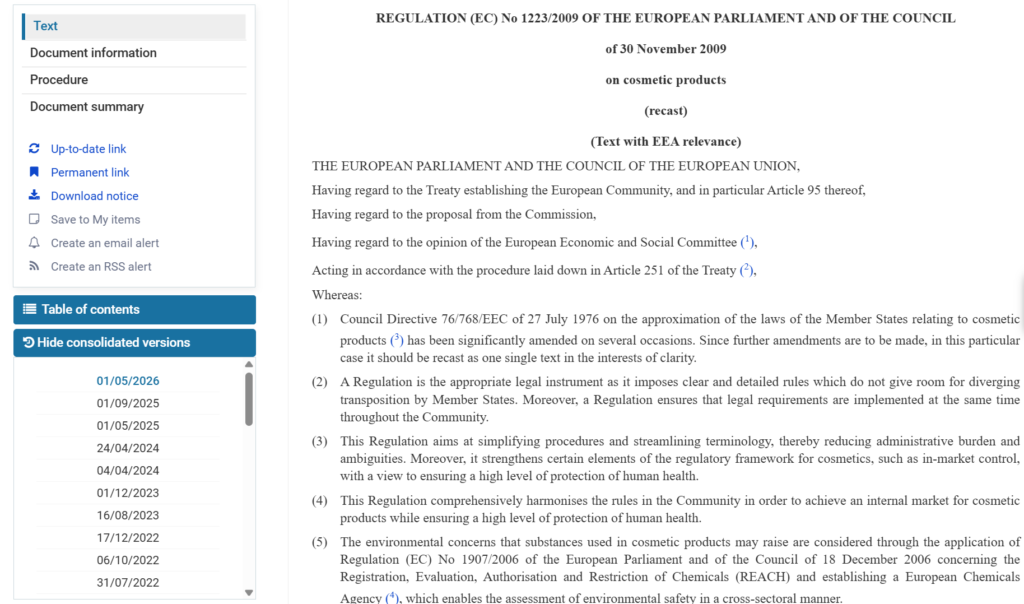
This regulation works alongside Common Criteria Regulation (EC) 655/2013, which sets out that a valid cosmetic claim must be truthful, supported by evidence, non-misleading, and must not attribute characteristics to the product that it does not have.
Put simply: you can say your product makes skin look brighter. You cannot say it “regenerates skin cells” or “treats hyperpigmentation.”
The Cosmetic Claim Mistake That Gets Listings Suppressed
Most sellers don’t get suppressed because they’re deliberately breaking rules. They get suppressed because their copy was written to sell, not to comply.
Efficacy Claims Without Substantiation
This is the most common cosmetic claim mistake. You write “reduces wrinkles by 87% in 4 weeks”, it sounds convincing, but Amazon EU will ask: do you have clinical data? What standard was the study conducted under? Who verified it?
Without substantiation records in your Product Information File (PIF), that number is a red flag. Quantitative claims without a source are claims waiting to be flagged.
Medicinal Language Hidden in Your Copy
This is subtler and more dangerous. Many sellers use language that sounds scientific but carries medical implications:
- “Stimulates natural collagen production.”
- “Restores the damaged skin barrier.”
- “Regulates sebum for oily skin.”
- “Reduces inflammation and soothes irritated skin.”
Words like restores, regulates, stimulates, and inflammation can all be classified as medicinal language, especially when they describe a physiological effect. Once a listing is flagged as a potential medicinal product, Amazon may suppress the listing or request additional compliance documentation.
How Amazon Enforces Compliance on Each EU Storefront
Amazon doesn’t apply a single uniform process across the EU. Each storefront enforces differently, and knowing that helps you prioritize correctly.
Amazon.de (Germany)
Germany is the strictest storefront. On top of the EU Cosmetics Regulation, Amazon.de also follows the Heilmittelwerbegesetz (HWG), Germany’s pharmaceutical advertising law. Any claim that implies disease treatment, even indirectly, gets flagged. Responsible Person documentation is also checked more rigorously here than in other markets. For brands entering from outside the EU, this level of scrutiny makes market selection critical.
Amazon.fr (France)
Amazon.fr focuses heavily on ingredient claims. If you highlight a specific ingredient and assign it a particular benefit (for example, “niacinamide minimizes pores”), that claim needs clear substantiation. France is also sensitive to SPF and sun protection claims; the cosmetic-versus-medicinal classification issue comes up frequently in that category.
Amazon.it (Italy)
Italy enforces strongly on hair and scalp claims. Phrases like “treats hair loss,” “stimulates hair growth,” or “regenerates hair follicles” are almost certain to trigger suppression. Amazon.it also checks label compliance carefully; inconsistencies between on-product labeling and listing content may also create compliance issues.
Amazon.es (Spain)
Amazon.es has a lower overall suppression rate, but that doesn’t mean it’s lenient. Spain pays particular attention to anti-aging claims; phrases like “erases wrinkles,” “rejuvenates skin,” or “reverses aging” are consistently flagged. Bilingual listings (Spanish alongside Catalan or Basque) can also get flagged when the translation uses stronger language than the original.
What a Suppression Actually Costs You
A suppressed listing doesn’t just cost you revenue during the downtime. The real damage runs deeper.
Suppression cuts current sales, weakens organic visibility, and raises the cost of recovery afterward. If you’re running PPC on a suppressed ASIN, that ad spend is funding nothing.
Beyond wasted PPC budget, the losses stack up:
- Lost velocity: Every day without sales is a day Amazon’s algorithm registers your product as less relevant than competitors.
- Lost review momentum: No visibility means no purchases, no reviews, and a broken accumulation cycle.
- Slow rank recovery: Getting back to pre-suppression ranking typically takes 3-6 weeks, depending on category competition and how quickly the listing was fixed.
One cosmetic claim mistake doesn’t just cost you a few suppressed days, the damage extends well into the following month.
How to Audit and Fix Your Claims Before Amazon Does
Auditing your listings before they get flagged doesn’t take long, but it needs to be done correctly.
The 6-Point EU Claim Compliance Checklist
Run every listing through this before publishing or editing:
- Does the claim describe a physiological effect? If yes, rewrite or remove it.
- Are there any quantified figures (%, timeframes, ratios)? If so, is your substantiation documentation ready?
- Does the copy use any disease or condition-related language? (inflammation, damage, treatment, cell regeneration…) → replace or reframe.
- Are ingredient claims backed by scientific evidence? Don’t assign benefits to individual ingredients without data.
- Does the physical product label match the listing copy? Critical on Amazon.it.
- Is the Responsible Person clearly documented in the PIF? Missing this is a standalone trigger on Amazon.de.
Safe Claim Language Swaps
The table below compares commonly flagged phrases with compliant alternatives:
| Flagged Claim | Safe Alternative |
| “Restores the skin barrier” | “Helps skin look healthy and smooth” |
| “Treats dark spots and hyperpigmentation” | “Helps skin look more even-toned over time” |
| “Stimulates collagen production” | “Helps skin look firmer and more lifted” |
| “Reduces wrinkles by 87% in 4 weeks” | “Skin looks smoother and more supple” |
| “Treats acne at the source” | “Helps skin look clear and refreshed” |
| “Regenerates hair follicles” | “Hair looks thicker and shinier” |
The pattern is consistent: shift from physiological action to observable surface result.
How to Update Live Listings Without Losing Rank
Editing a live listing is algorithm-sensitive. A few rules to reduce the impact:
- Don’t edit title and bullet points at the same time. Change one section at a time, spacing edits at least 48-72 hours apart so Amazon can re-index each change.
- Keep primary keywords in the title intact. Only replace the claim language, don’t restructure keyword placement.
- Back up your old copy before making changes. If suppression occurs after an edit, you’ll need to compare versions to identify the trigger.
- After updating, run Sponsored Products at a low budget to rebuild velocity, especially if the listing was paused beforehand.
After Reinstatement: How to Stay Protected Long-Term
Getting reinstated doesn’t mean the problem is solved. Amazon EU continuously updates its enforcement, and a compliant claim today can be flagged six months from now.
To avoid repeating the same cosmetic claim mistake, build a process rather than reacting case by case:
- Create an internal “claim bank”: a reviewed and approved list of claims, organized by market. Any copywriter or external agency works from this list only.
- Audit listings every quarter: especially after Amazon EU announces policy updates.
- Check the ASIN health dashboard weekly: suppression often shows warning signals a few days before a listing is fully hidden.
- Keep your PIF current: Responsible Person documentation needs updating whenever you change a formula or packaging.
A well-compliant listing doesn’t just avoid suppression; it builds a stronger ranking foundation because velocity is never interrupted.
Claim rules are only part of what governs a beauty listing in Europe. The wider picture is in our Amazon EU compliance guide.
Claim wording is the single most common reason a beauty listing disappears. It is one of the things we handle as an Amazon agency for beauty and cosmetics brands.
Conclusion
A cosmetic claim mistake isn’t a writing problem; it’s a process problem. On all four EU marketplaces, the line between “great sales copy” and “policy violation” is thinner than most sellers expect. Know the rules, check your copy against a compliance checklist, and have your documentation ready before Amazon asks for it. That’s the only reliable way to keep your listings live and your rankings intact.
1. What cosmetic claims are banned on Amazon EU?
Claims that imply medicinal effects, unsubstantiated efficacy statistics, and disease-treatment language are the most commonly flagged categories under EU Cosmetics Regulation 1223/2009.
2. Why was my cosmetic listing suppressed on Amazon.de?
Most suppressions on Amazon.de are triggered by claims that violate Common Criteria Regulation 655/2013, missing Responsible Person documentation, or language that implies a pharmaceutical effect.
3. How long does it take to recover rank after an Amazon listing suppression?
Typically, 3-6 weeks to return to pre-suppression ranking, depending on category competition and how quickly the listing was corrected.