Amazon search ranking trends are no longer usefully explained by one vague instruction: add keywords and wait. A challenger ASIN wins a query when Amazon can index it correctly, shoppers choose it over the category leader, the offer stays buyable, and the post-click experience produces orders rather than exits. Miss one of those four conditions for 7 days, and a rival can take the clicks you paid to create.
The ranking trend is query-level, not keyword-level
Amazon does not publish a ranking formula, and any agency claiming it has found the single algorithmic lever is selling smoke. What operators can see is query-level customer behavior. In Seller Central, go to Brands > Brand Analytics > Search Query Performance and select a weekly or monthly view. The report separates search-query volume from your ASIN’s impression, click, cart-add, and purchase performance.
That distinction changes the work. A broad phrase such as “vitamin C serum” can generate impressions while a more specific query such as “vitamin C serum for dark spots” produces the purchases. If your ASIN has a strong click share but weak purchase share on the second query, buying more traffic does not fix rank. The listing, price, reviews, variation setup, or offer is losing the sale after the click.
Search Query Performance is available to eligible Brand Registry owners and gives four useful measures: Search Query Volume, Search Query Score, and ASIN-level impression, click, cart-add, and purchase share. Pull 13 weeks, not one good week. A 1-week spike around Prime Day, a coupon, or a stockout can make a weak search term look strategically important.
Map the gaps competitors leave behind
Use the report to compare the top 20 queries by purchase share against the top 20 queries by click share. The gap is where money leaks. A query with 8% click share and 3% purchase share deserves diagnosis before expansion. A query with 2% click share and 5% purchase share may be an underexposed conversion opportunity – provided the query is relevant to the product and not being inflated by a branded search term.
Then check Reports > Business Reports > Detail Page Sales and Traffic by Child Item. Sessions, page views, ordered product sales, units ordered, and Unit Session Percentage show whether the decline is search-specific or product-wide. If Unit Session Percentage falls from 18% to 11% while sessions hold, the problem is conversion. If sessions collapse while conversion holds, look first at indexing, organic visibility, ad coverage, suppressed content, or an out-of-stock offer.
Amazon search ranking trends reward retail-ready offers
The cleanest keyword strategy loses to a broken retail offer. Amazon wants to show products shoppers can actually buy, receive, and return with confidence. That is why availability, delivery promise, price position, and Buy Box eligibility can alter search visibility even when the title and bullets have not changed.
A 2-day FBA stockout is not merely 2 days of lost sales. The ASIN loses the order history and ad momentum attached to its active offer, then has to earn conversion again after inventory checks in. Watch Inventory > Manage All Inventory daily for Available, Inbound, Reserved, and Unfulfillable quantities. For replenishment decisions, use Inventory > Inventory Planning > Restock Inventory alongside the 30-day and 90-day unit-sales trend in Business Reports.
Do not treat a variation family as harmless catalog housekeeping. If a parent-child relationship breaks, reviews may no longer aggregate as expected, color or size options can disappear, and advertising may point at a child ASIN with a damaged detail-page experience. Check the Variation Wizard or the category-specific inventory file before changing variation themes. A beauty shade variation and a multipack are not interchangeable just because both increase average order value.
Price is equally query-sensitive. In Pricing > Automate Pricing or Pricing > Manage All Pricing, a sudden price increase may protect margin while reducing conversion enough to hand a keyword to a larger competitor. The right question is not whether the item still sells. It is whether Unit Session Percentage, purchase share, and TACoS improve or deteriorate after the change. Test one variable over a defined 14-day period where seasonality allows it.
Titles now have less room for lazy SEO
Amazon’s U.S. product-title requirements took effect on January 21, 2025. For affected listings, titles are capped at 200 characters, certain special characters are restricted, and the same word generally cannot appear more than twice, subject to category exceptions. That removed an old tactic: cramming repeated keyword fragments into a 250-plus-character title and hoping the crawler sorts it out.
In 2026, the practical response is precision. Put the product type, primary differentiator, and critical format or size where a human can understand them in the first 80 characters. Then use the Product Type, Item Form, Scent, Color, Size, Material, and other category fields accurately. These attributes influence filters, merchandising, and how confidently Amazon can match an ASIN to a shopper’s query.
For backend terms, inspect Catalog > Complete Your Drafts or the relevant category template rather than recycling a generic keyword sheet. Search Terms remain limited to 250 bytes in many categories, not 250 characters. Repeating words already present in the title, bullets, brand name, or attributes wastes that finite field. So do misspellings, competitor trademarks, and claims you cannot substantiate.
A skincare brand should not force “eczema treatment” into Search Terms if the product is a cosmetic moisturizer without the regulatory basis for that claim. In the U.S., Amazon can suppress the ASIN through Performance > Account Health > Product Policy Compliance. In Europe, the same aggressive copy may create a separate claims, labeling, or responsible-person problem. A ranking gain that ends in suppression is donated traffic to the giants.
Conversion signals are getting harder to fake
Amazon’s search experience increasingly gives shoppers faster comparison points: delivery dates, ratings, price, badges, images, variations, and increasingly AI-assisted product discovery. The commercial implication is straightforward. A listing must answer the purchase question before the shopper returns to results and clicks the incumbent brand.
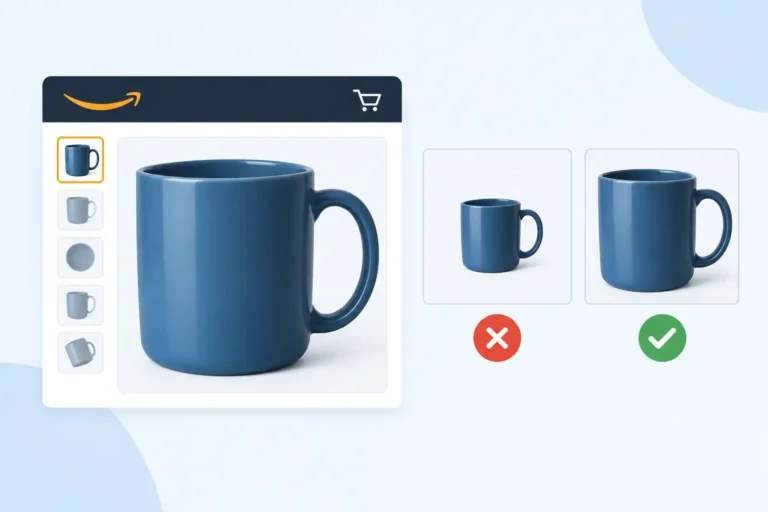
Start with the first 7 images, not the seventh bullet. On mobile, the main image, price, rating, pack count, and first image sequence carry disproportionate weight because shoppers can compare them in seconds. For a 30 ml serum, show 30 ml clearly. For a 2-pack, show the count without creating the misleading impression of 2 full-size bottles if one is a refill. Confusion may raise clicks, but it lowers conversion and increases returns.
The Manage Your Experiments tool can test eligible product titles, main images, A+ Content, and other assets depending on the marketplace and account. Run an experiment long enough to collect meaningful conversion behavior, and do not change price, coupons, images, and title in the same test window. If three inputs move together, the result is not a learning – it is a guess with a dashboard attached.
Reviews still matter, but the trend worth watching is review relevance. A 4.6-star ASIN with 2,000 reviews can lose to a 4.4-star challenger when the challenger makes the use case, size, and ingredient story unmistakable. Read the last 20 verified-purchase reviews and the last 20 returns or voice-of-customer comments where available. Repeated language such as “smaller than expected” or “not for sensitive skin” belongs in the content and packaging decision, not in a monthly reporting slide.
Defend rank after you win it
Organic visibility is not an asset you own permanently. It is a position you defend against stockouts, unauthorized sellers, listing edits, price erosion, policy flags, and competitors targeting the same query. Review Brands > Brand Analytics > Search Query Performance every Monday against the prior 4 weeks, then inspect the ASINs above you for offer changes rather than assuming Amazon changed its algorithm.
For each priority ASIN this week, complete four checks:
- Export 13 weeks of Search Query Performance and identify the 5 non-branded queries with the largest gap between click share and purchase share.
- Compare those queries with Unit Session Percentage in Detail Page Sales and Traffic by Child Item for the same period.
- Check Available inventory, Buy Box status, and delivery promise for every child ASIN carrying those terms.
- Audit the title against the January 21, 2025 requirements, then remove duplicated backend terms from the 250-byte Search Terms field.
That is the work that turns ranking from a superstition into a commercial operating system. Take one query where you are currently donating clicks to a bigger brand, fix the exact break in the funnel, and measure the next 14 days before moving to the next battlefield.
Want a second pair of seller's eyes on your listings?
We are active Amazon sellers ourselves, not only consultants. See how we handle this in professional Amazon listing building, send us one ASIN for a free brand-control audit, or book a 30-minute strategy call.
Free tools: title rewriter · main image checker · EU compliance checker · AI tag · Stolen from the Giants swipe file