If you’re running a Shopify brand and starting to look at Amazon, chances are this question has already come up: Should you sell as a Seller (3P), a Vendor (1P), or use a Hybrid model? It sounds simple, but this decision directly affects your margins, pricing control, and how your brand grows over time.
Amazon doesn’t offer just one way to sell. Seller Central gives you more control and flexibility. Vendor Central works like a wholesale relationship with Amazon. The Hybrid model sits in between, offering balance but adding complexity. Each option has trade-offs, and not every Shopify brand is a good fit for the same setup.
In this guide, we’ll break down Seller, Vendor, and Hybrid models in a clear, practical way. No heavy theory. Just the key points you need to choose the right path for your Shopify brand on Amazon.
Overview of Amazon Selling Models
If you’re new to selling on Amazon, you’ll quickly run into three familiar terms: Seller (3P), Vendor (1P), and Hybrid. Each model represents a different way of working with Amazon. Choosing the right one directly affects your margins, pricing control, and how you operate your brand.
In this section, we’ll go through each model step by step. No complex jargon. No heavy theory. The goal is to help you understand them fast and see where you should start.
What Is an Amazon Seller (3P)?
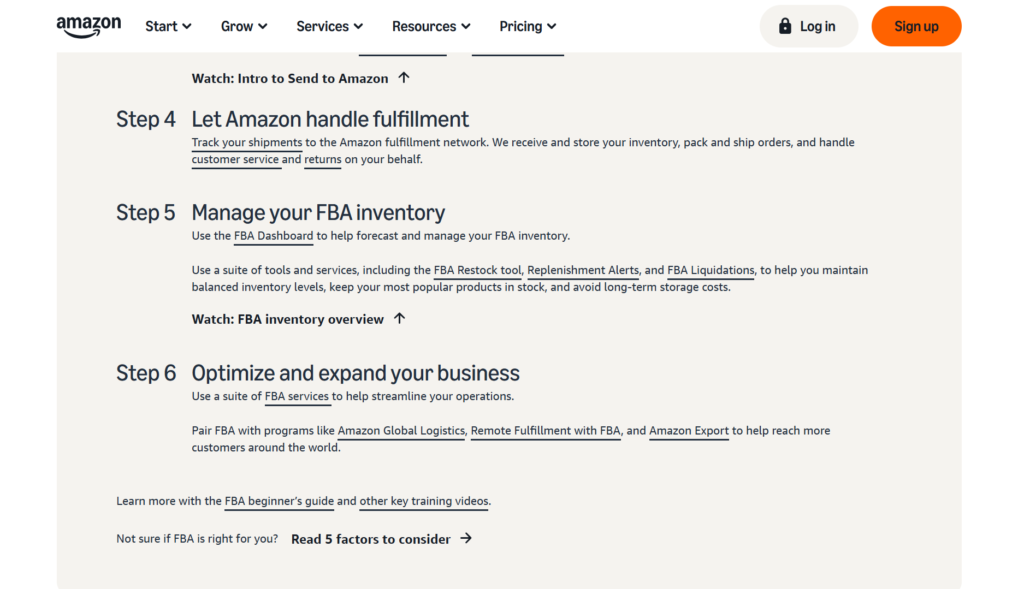
Amazon Seller, also known as a Third-Party Seller (3P), is the most common model today. In this setup, you sell directly to customers, while Amazon acts as the marketplace. You create your own listings. You set your own prices. You also manage inventory. If you use FBA, Amazon handles storage and fulfillment. If you use FBM, you manage everything yourself.
Source: Amazon
The biggest advantage of 3P is control. You control pricing, content, images, and advertising strategy. This model works well for small brands, DTC brands, and new sellers. That said, 3P requires close operational management. You need to stay on top of inventory, ads, and customer service.
What Is Amazon Vendor (1P)?
Amazon Vendor, or First-Party (1P), is a model where Amazon buys products from you and resells them to customers. In this case, you act as a supplier to Amazon. Amazon places purchase orders (POs). You ship products to Amazon. Amazon sets the final retail price and controls listings and promotions.
The main strengths of 1P are scale and stability. Order volumes are often larger. Operations are simpler. Your brand may also receive preferential visibility from Amazon. The trade-off is less control. You don’t control pricing. Margins are usually lower. And Amazon can push for discounts at any time.
What Is the Amazon Hybrid Model?
The Hybrid model combines both 3P and 1P in a single strategy. Many larger brands use this approach. You might sell key products as 3P to protect margins. At the same time, you use 1P for high-volume items or products that need broader exposure.
A hybrid gives you more flexibility. You’re not fully dependent on Amazon. You also don’t miss out on the benefits of Vendor Central. However, it’s more complex. You need to manage two systems at once. When done right, though, Hybrid can be the most effective way to scale sustainably on Amazon.
Cost Structure Comparison

Before choosing a selling model, you need to understand one thing clearly: costs decide your real margins. On Amazon, fees don’t look scary at first. But over time, they shape how profitable your Shopify brand really is.
Let’s break this down by model.
Seller (3P) Fees
With Seller (3P), costs are transparent but add up fast. You’ll pay a referral fee, usually 8-15%, depending on the category. If you use FBA, you also pay fulfillment and storage fees. These depend on product size, weight, and season.
On top of that, there’s PPC. Ads are optional, but in reality, most brands need them to stay visible. You control how much you spend, which is good. But you also carry all the risk. The upside? You see every cost line. You can optimize pricing, ads, and inventory over time. For many Shopify brands, this makes 3P predictable and manageable.
Vendor (1P) Fees
Vendor costs work very differently. You won’t see a simple fee list. Instead, Amazon builds costs into wholesale pricing and deductions. These can include chargebacks, co-op fees, marketing allowances, and early payment discounts.
Margins often look fine on paper. In practice, they shrink after deductions. You also have less visibility into how Amazon calculates final profitability. The benefit is scale. Large orders can offset thinner margins. But you need strong cost control and cash flow to survive this model.
Hybrid Cost Logic
Hybrid blends both worlds, and so do the costs. You use 3P where margins matter most. You use 1P where volume and efficiency matter more. This helps balance profit and growth.
The trade-off is complexity. You manage two cost structures at once. Still, for growing Shopify brands, Hybrid often delivers the best long-term cost control if you track performance carefully.
Which Model Fits a Shopify Brand?
Not every Shopify brand should use the same Amazon model. The right choice depends on your size, resources, and growth stage. Let’s keep this simple.
For Small or Growing Shopify Brands
If you’re early in your Amazon journey, Seller (3P) is usually the best fit. It gives you control over pricing, listings, and ads. That matters when you’re still testing demand. You can start with a few SKUs. You can adjust fast. You also learn how Amazon works without big commitments. Yes, you handle more tasks. But the flexibility is worth it at this stage.
For Mid-size Brands With Strong Operations
Once you have steady sales and a solid supply chain, Hybrid starts to make sense. Many brands land here naturally. You keep top-margin products under 3P. You move high-volume SKUs to 1P for scale. This setup helps balance profit and reach. It does add complexity. But if your team and systems are ready, Hybrid gives you room to grow.
For Large or Enterprise Brands
For large brands, Vendor (1P) can work well. Strong production, cash flow, and logistics are key here. Big PO volumes reduce risk. Amazon handles more of the selling. The trade-off is control, but at scale, efficiency often wins.
Step-by-Step Framework to Choose the Right Model
Below is a simple five-step framework many Shopify brands use to make the right call on Amazon.
Step 1: Assess Your Control Needs
Start with a simple question: how much control do you need? Do you want to set your own prices? Do you want full control over listings, images, and content updates? If the answer is yes, Seller (3P) is usually the best fit.
With Vendor (1P), Amazon controls more than you might expect. Pricing, promotions, and sometimes even how your product is positioned. This isn’t always bad, but it can clash with a DTC mindset. Hybrid sits in the middle. You keep control where it matters most, while letting Amazon handle the rest. For many brands, that balance feels right.
Step 2: Evaluate Your Supply Chain
Next, take an honest look at your supply chain. This step is critical. Is your production stable? Can you forecast inventory with confidence? Can you handle large, sudden orders? If your supply chain is still developing, Seller (3P) is safer. You restock based on demand. You avoid pressure from large purchase orders.

Vendor (1P) requires more discipline. Amazon may place big POs with strict timelines. Missing them can hurt the relationship. A hybrid only makes sense once your operations can handle that rhythm. Simply put: the stronger your supply chain, the more options you have.
Step 3: Consider Financial Goals
Now let’s talk about money. Not just revenue, but cash flow and margins. Seller (3P) often delivers higher margins. Fees are visible. You can optimize pricing, ads, and inventory over time. The trade-off is that you carry more risk and ad spend.
Vendor (1P) usually offers larger volumes and steadier revenue. But margins are thinner. Deductions and allowances can reduce profitability quickly. Hybrid helps balance both sides. You protect margins on key SKUs while using 1P to scale volume. For long-term growth, this mix is often appealing.
Step 4: Match Model to Product Types
Not every product should use the same model. This is where strategy matters. High-margin, brand-defining products usually perform best under 3P. You protect pricing and brand image.
High-volume, price-sensitive products often fit better under 1P. Amazon is good at pushing scale in these categories. With Hybrid, you split your catalog intentionally. Each SKU has a role. Nothing is random. That clarity makes execution easier.
Step 5: Test & Measure
Finally, don’t try to get everything perfect on day one. Amazon rewards testing. Start small. Launch a few SKUs. Track margins, ad spend, sales velocity, and operational workload. After 60 to 90 days, patterns will emerge.
Many Shopify brands start with Seller (3P). As sales stabilize, they move toward Hybrid. That’s a natural progression, not a mistake. The key is measurement. Amazon doesn’t reward fast decisions. It rewards informed ones backed by data.
Conclusion
For most Shopify brands, the right Amazon model follows a simple path. Start with Seller (3P). It gives you control over pricing, listings, and ads. That control is crucial when you are still testing demand and learning how Amazon works. You can move fast, fix issues early, and adjust your strategy without pressure.
As your brand grows, Hybrid becomes the natural next step. You keep high-margin, brand-critical products under 3P. At the same time, you use 1P for high-volume SKUs. This helps you scale without giving up pricing power. It does add operational work, but it also gives you flexibility.
Vendor (1P) is best suited for large brands with strong supply chains and solid cash flow. Amazon expects consistency at scale. If your operations are not ready, the lack of control and margin pressure can become real problems.
The key takeaway is simple. Your selling model should match your current stage, not your ambition. Start simple. Measure results. Adjust as your brand grows.
FAQs
Can I switch Amazon selling models later?
Yes, and many brands do. Most Shopify brands start with Seller (3P) because it offers flexibility and control. As sales stabilize and operations improve, they move toward Hybrid. Switching models is part of normal growth, not a failure.
Is Vendor (1P) better than Seller (3P)?
Not always. Vendor offers scale and operational simplicity, but you lose pricing control and usually accept lower margins. Seller (3P) works better when margins and brand control matter more.
Is the Hybrid model hard to manage?
It requires more coordination, but it’s manageable with clear rules. You decide which SKUs stay 3P and which move to 1P. With good tracking, Hybrid often delivers the best balance of growth and profit.