You’re running a Shopify store. You sell. You collect data every day. Orders, customers, repeat purchases, it’s all there.
Now here’s a simple question: are you actually using that data to grow on Amazon?
Most sellers treat Shopify and Amazon like two separate worlds. One shows you who your customers are. The other shows you how your products perform. When these two data sources stay disconnected, you miss the full picture.
Connecting Shopify first-party data with Amazon insights changes that. It helps you understand demand, improve listings, and make smarter decisions across both channels. And no, this doesn’t require a complicated data science setup.
What Is Shopify First-Party Data?
Shopify first-party data is the data you collect directly from your customers. Every time someone visits your store, places an order, or signs up for emails, Shopify records that action. This includes customer profiles, purchase history, product views, and checkout behavior. You own this data. That’s what makes it valuable.
So why does first-party data matter so much?
Because it shows real intent, you see who buys, how often they return, and what products they care about. You’re not relying on ad platforms or third-party cookies to tell the story. You already have it.
Let’s break it down a bit. Shopify first-party data usually falls into three groups.
- Customer data, like email, location, and order history.
- Behavior data, such as pages viewed and time spent on products.
- Transaction data, including order value, product bundles, and repeat purchases.
This data helps you spot patterns. Maybe a product sells well to a specific audience. Maybe customers reorder every 30 days. These insights matter, especially when you sell on Amazon too.
What Are Amazon Insights
Amazon insights are the data signals Amazon gives brands to understand how products perform on the platform. They don’t tell you everything, but they tell you enough to make better decisions.
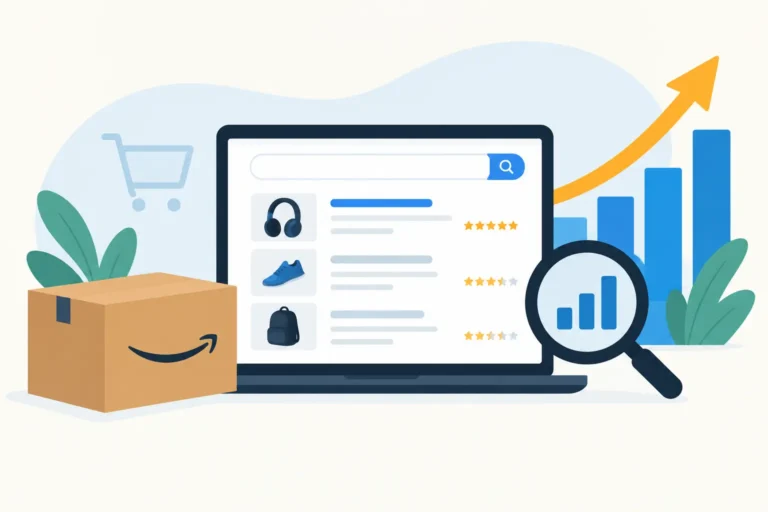
Think of Amazon as a huge demand engine. Every search, click, and purchase leaves a trace. Amazon collects those signals and turns them into insights you can access through tools like Seller Central, Brand Analytics, and ad dashboards.
In fact, 50%+ of US consumers start their product searches on Amazon, making it one of the most reliable sources of real-time demand signals for brands.
What do these insights help you do?
They show how shoppers search. They show which categories are growing. They also show how your ads and listings perform compared to others. When used correctly, Amazon Insights helps you optimize listings, plan inventory, and adjust pricing with greater confidence.
Available Amazon Insights for Brands
Search trends: Amazon shows you what customers are searching for and how often. This helps you understand demand before you change titles, bullets, or ads. Are certain keywords rising fast? That’s a signal worth watching.
Category-level demand: You can see how entire categories perform over time. This is useful when launching new products or expanding variations.
Ad performance metrics: Amazon provides data on impressions, clicks, conversions, and ad spend. These metrics tell you what actually drives sales, not just traffic.
Reviews & pricing signals: Ratings, review volume, and price changes impact conversions. Amazon insights help you track how these factors affect performance.
Amazon Data You Should Never Try to Access
Customer-level data: Amazon does not share individual customer identities. Trying to bypass this breaks platform rules.
Cross-platform identifiers: You can’t connect Amazon shoppers to external profiles. Amazon keeps that data private, and it should stay that way.
Ethical & Legal Boundaries When Combining Data
When people hear “connecting Shopify data with Amazon insights,” they often picture a full data merge. Customer A on Shopify becomes Customer A on Amazon. That sounds powerful, right? It’s also not allowed.
Understanding the boundaries here is critical. Not just to stay compliant, but to build a strategy that actually lasts.
Why You Cannot “Merge” Customer Data
Amazon does not share customer-level data. You will never see names, emails, or identities of Amazon shoppers. You also cannot match Shopify customers to Amazon buyers using emails, pixels, or hidden identifiers. Trying to do this breaks Amazon’s terms and can put your account at risk.
There’s also a legal side. Privacy regulations like GDPR and CCPA limit how personal data can be used across platforms. Even if you own your Shopify data, you cannot force a one-to-one connection with Amazon users.
What “Ethical Connection” Actually Means
An ethical connection is not about people. It’s about patterns. You use Shopify data to understand customer behavior. What products repeat? What bundles work? What price points convert best? This gives you strong internal signals.
Then you look at Amazon insights for market behavior. Search trends, category demand, review velocity, and ad performance. These are external signals. The connection happens at the decision level, not the user level.
For example, if a product has high repeat purchases on Shopify, you can check Amazon search trends to confirm demand. If customers respond well to bundles on Shopify, you can test similar bundles on Amazon.
You’re not tracking individuals. You’re aligning signals. That’s the right way to do it. It’s compliant, scalable, and respected by both platforms. And most importantly, it still gives you a clearer picture of what to do next.
Connecting Shopify First-Party Data with Amazon Insights
At this point, you already have two powerful data sources. Shopify tells you what your customers do. Amazon tells you what the market wants. The real value comes when you let these two talk to each other.
Use Shopify First-Party to Identify High-Value Products
Your own store is where intent is the clearest. People choose to buy from you, without Amazon’s algorithms in the middle. That makes this data extremely valuable.
Look at a few simple questions:
- Which products sell consistently?
- Which products get repeat purchases?
- Which SKUs drive the highest order value?
You don’t need complex models here. A product that sells well and gets reordered is usually a strong candidate for Amazon. Why? Because repeat behavior signals real demand, not impulse buys.
Also, pay attention to bundles. If customers often buy two items together on Shopify, that’s a hint. Amazon shoppers love convenience, too. The behavior might already be telling you what to launch next.
Validate Demand Using Amazon Market Signals

Now take those shortlisted products and check Amazon. This is where Amazon Insights shines. You’re not guessing anymore. You’re validating.
Look at search trends first. Are people actively searching for this product or related keywords? If search volume is growing, that’s a green light. If it’s flat or declining, you may need to rethink timing.
Next, scan the category. How crowded is it? Are top listings getting steady reviews? This tells you if demand is real or just seasonal noise. Think of Amazon as your demand mirror. Shopify shows what worked. Amazon shows whether it can scale.
Align Pricing, Bundling, and Product Positioning
Shopify data shows what customers are willing to pay. Amazon data shows what the market expects. Your job is to find the overlap. If a product sells well at a premium on Shopify, check how premium listings perform on Amazon. Do higher-priced products convert? If yes, don’t race to the bottom.
Bundling is another easy win. If bundles increase order value on Shopify, test similar bundles on Amazon. Many sellers skip this and leave money on the table. Finally, use both data sources to shape positioning. Shopify tells you why customers buy. Amazon tells you how they search. Combine these insights to refine titles, bullets, and images.
Use Cases: How Brands Actually Apply This Strategy
So how does this look in the real world? Let’s move from theory to action. Below are three common ways brands connect Shopify first-party data with Amazon insights and actually see results.
Product Expansion & Launch Strategy
Most smart launches don’t start on Amazon. They start on Shopify. Brands often test products or variations in their own store first. Why? Because feedback is faster and cleaner. You can see which colors sell, which sizes get returned, and which versions people reorder.
Once a product proves itself on Shopify, Amazon insights help answer the next question: Is this ready to scale?
Search trends show whether demand exists beyond your audience. Category data shows how competitive the space is. Together, these signals help brands decide what to launch, when to launch, and how many units to send in. This reduces guesswork and prevents overstocking.
Amazon Ads & Off-Amazon Retargeting
Here’s a common mistake. Brands run Amazon ads without knowing which products deserve the budget. Shopify data fixes that.
If a product has high lifetime value or strong repeat purchases on Shopify, it’s often worth supporting with Amazon Ads. You’re not just buying traffic. You’re investing in a proven product.
On the flip side, Amazon ad data shows which keywords convert best. These insights can guide off-Amazon campaigns too. For example, you might highlight top-performing features in social ads or email campaigns. You’re not retargeting Amazon shoppers directly. You’re improving messaging using what works.
SEO & Content Strategy Using Amazon Demand Data
Amazon is one of the best demand research tools out there. Brands use Amazon search data to understand how people actually phrase their needs.
Those insights don’t have to stay on Amazon. High-volume keywords can inform Shopify product pages, blog content, and FAQs. If shoppers search for a specific problem on Amazon, there’s a good chance they search for it on Google too.
Shopify data then closes the loop. You see which content drives sales, not just traffic. That’s how brands build content strategies that convert, not just rank.
Conclusion
Connecting Shopify first-party data with Amazon insights is not about collecting more data. It’s about using the data you already have with purpose.
Shopify shows how real customers behave. Amazon shows how the market responds. When these two sources work together, decisions become clearer and more grounded. You can see which products deserve focus, where demand is strong, and how to adjust before scaling.
FAQs
1. Why should brands connect Shopify first-party data with Amazon insights?
Because it helps brands make better decisions, Shopify data shows real customer behavior, while Amazon insights reveal market demand. When combined at the decision level, brands reduce guesswork and improve performance across both channels.
2. Can Shopify customer data be merged with Amazon customer data?
No. Amazon does not provide customer-level identities, and merging users across platforms is not allowed. The correct approach is to align behavioral and market patterns, not individual people.
3. What is the biggest benefit of using this strategy in practice?
It helps brands scale with confidence. Products are launched based on proven demand, pricing and bundling are aligned with market expectations, and ads and content are guided by signals that already work.