If you’re a manufacturer selling on Amazon, Brand Registry is how you keep control of your own products. Without it, anyone can hijack your listing, change your images, or sell knockoffs under your brand name. Many manufacturers only realize the value of Brand Registry after losing control of their own products. By then, it’s too late and costly.
This guide focuses on the practical perspective of a manufacturer: when to register, what to prepare, and how to leverage Brand Registry to control brand image, data, and customer experience on Amazon.
What Is Amazon Brand Registry?
Amazon Brand Registry is a program that gives brand owners control over how their products appear on Amazon. Once you’re enrolled, you decide who can edit your listings, upload images, and represent your brand.
According to Amazon data, brands enrolled in Brand Registry report, on average, 99% fewer suspected infringement cases, as Amazon proactively identifies and blocks counterfeit and listing abuse before brands need to file complaints.
That matters more than most manufacturers expect. Without Brand Registry, Amazon treats your product pages as shared property. Any seller can jump in and change titles, bullet points, or even claim your brand. Brand Registry flips that dynamic. Amazon recognizes you as the official brand owner and backs you up when issues come up, from counterfeit claims to listing abuse.
Amazon Brand Registry Eligibility Requirements
Amazon does not open Brand Registry to everyone. They only approve brands that can clearly prove ownership and legitimacy. Miss one requirement below, and your application will likely be rejected.
Trademark requirements
This is the most critical part. Amazon only accepts fully registered trademarks, not pending applications.
You’ll need to provide:
- Trademark registration number: The official registration number issued by the trademark authority.
- Trademark owner name: This must match exactly with the name shown on the trademark certificate.
- Trademark class (Nice Classification): The product class your trademark is registered under. Make sure it directly relates to what you’re selling.
- Country/region of registration: The jurisdiction where the trademark is registered (USPTO, EUIPO, UKIPO, etc.).
Trademarks registered only at a local or non-recognized office usually don’t qualify. This is a common mistake for sellers who register domestically but plan to sell on Amazon US or EU.
Trademark ownership rules
Your brand name on Amazon must match the trademark exactly. No abbreviations, no added words, no missing spaces or punctuation. Amazon treats this as a strict, character-by-character match.
There are two ownership scenarios Amazon allows:
- Manufacturer owns the trademarks; This is the cleanest setup. You own the brand, you own the trademark, and Amazon rarely asks follow-up questions.
- Licensed trademarks; If you’re using a trademark owned by another party, Amazon requires a formal authorization letter. This document must clearly state that you’re allowed to sell products under that brand on Amazon. Generic or vague letters often lead to rejection.
If ownership isn’t crystal clear, Brand Registry approval becomes slow and unpredictable.
Product & packaging requirements
Your brand name must appear:
- On the product itself
- On the packaging
In both cases, the brand has to be permanently affixed.
Amazon does not accept:
- Temporary stickers
- Peel-off labels
- Generic packaging without branding
If the brand can be removed or swapped easily, Amazon considers it non-compliant.
For private label sellers, this usually means printing the brand directly on the product or using custom packaging from the factory. Amazon frequently asks for real product photos during verification, and this is where many sellers fail despite having a valid trademark.
Step-by-Step Amazon Brand Registry Application Process
Amazon Brand Registry is a short process, but Amazon checks details aggressively. Most rejections happen because something small wasn’t aligned upfront. If you prepare properly, the application itself is straightforward.
Step 1: Prepare trademark & brand assets
First, check the trademark status in the official database (USPTO, EUIPO, UKIPO, etc.). It must be fully registered, active, and match the brand you plan to use on Amazon. Pending or “applied-for” trademarks will not work.
Next, standardize your brand name across all listings. This step causes more issues than people expect. Your brand name on Amazon must match the trademark exactly, same spelling, same spacing, same punctuation.
For example, if your trademark is registered as “YangYang,” you cannot use “Yang Yang” or “YangYang™” in your listings. Amazon treats this as a mismatch.
Before moving on, audit:
- Existing titles and bullet points
- Backend brand name fields
- Packaging and product images
Everything should point to one consistent brand identity.
Step 2: Submit application on Amazon Brand Registry portal
Once your assets are ready, go to the Amazon Brand Registry portal and start the application.
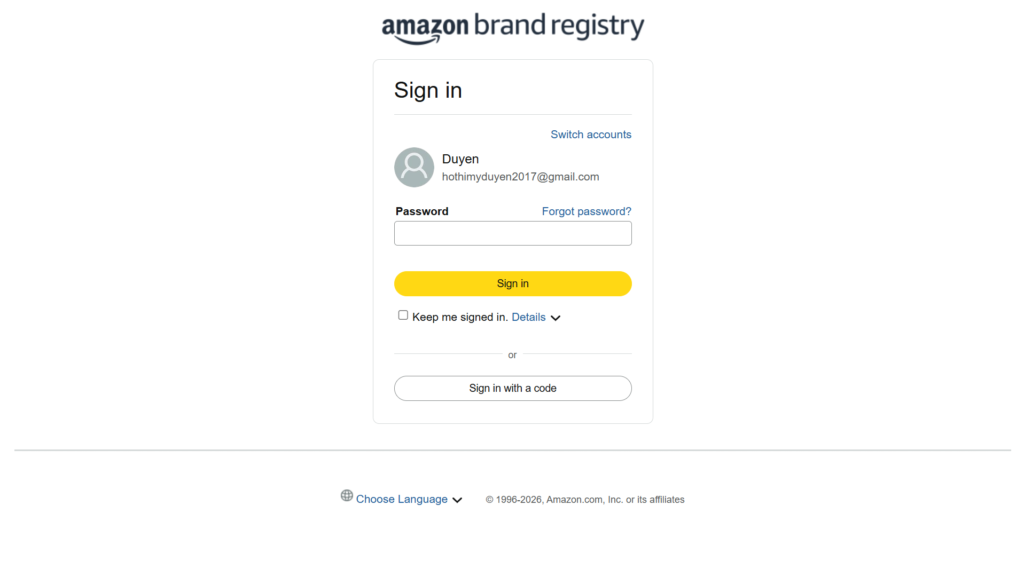
Source: Amazon
You’ll be asked to provide:
- Brand name (exact trademark match)
- Trademark registration number
- Trademark office and country
- Product categories you plan to sell in
- Images of products and packaging showing the brand permanently affixed
Amazon wants real photos, not mockups. The brand name must be clearly visible on the product itself or the packaging. If it looks like a removable sticker or a generic box, expect a rejection.
Step 3: Verification process
After submission, Amazon starts verification. Amazon will send a verification code to one of two places, the trademark owner’s contact email, or the law firm listed on the trademark registration. Amazon does not send the code to your Seller Central email unless you are also the trademark owner on record.
As a manufacturer, you need to make sure the person or firm receiving that email knows to expect it and respond quickly. The code usually expires if not confirmed within a limited window. Once you receive the code, log back into the Brand Registry portal and submit it exactly as provided. Delays or typos here can reset the process.
Step 4: Approval & account linking
After successful verification, Amazon activates your Brand Registry access.
At this point:
- Your brand is officially registered
- You gain control over brand content and protections
If you operate multiple Seller accounts (for different regions, subsidiaries, or partners), this is where you assign permissions. Brand Registry allows you to grant specific roles, content management, reporting, or brand protection, without giving full account access.
For manufacturers working with distributors, this step is critical. You can control who sells under your brand and who can edit listings, without losing ownership.
Amazon Brand Registry Timeline: How Long Does It Take?
From a manufacturer’s point of view, Amazon Brand Registry isn’t slow, but it is unforgiving. If everything lines up, the process can move surprisingly fast. If one detail is off, the timeline stretches without warning.
Average timeline
In most clean cases, expect two to three weeks end to end.
- Document preparation 3-7 days:This is on you, not Amazon. You gather trademark details, align brand naming, and prepare real product and packaging photos. Manufacturers with existing branded packaging usually move faster here.
- Amazon review 7-14 days: Amazon checks trademark validity, brand name consistency, and image compliance. This is where most delays happen if anything looks questionable.
- Verification code 1-3 days: Once Amazon triggers verification, the code usually arrives quickly. Delays only happen when the trademark owner or law firm doesn’t respond in time.
Factors that affect the timeline
Where your trademark is registered matters more than sellers expect. USPTO, EUIPO, and UKIPO registrations move smoothly. Lesser-known or local trademark offices often trigger extra checks or outright rejection.
Brand name sensitivity or overlap can slow things down. If your brand name resembles an existing brand, contains generic terms, or overlaps with restricted keywords, Amazon may manually review it instead of auto-approving.
Image compliance is another common bottleneck. If Amazon suspects removable stickers, edited mockups, or generic packaging, they’ll reject and ask for new photos. Each resubmission resets part of the clock.
Conclusion
For manufacturers selling on Amazon, Brand Registry isn’t paperwork for the sake of compliance. It’s how you keep ownership of your own products. Registering early prevents listings from being edited by random sellers, images from being swapped, and your brand from being diluted by lookalikes.
1. Do manufacturers really need Amazon Brand Registry?
Yes. Without it, Amazon treats your listings as shared content. Other sellers can change images, text, or even sell under your brand name.
2. Can I apply if my trademark is still pending?
No. Amazon only accepts fully registered trademarks. Pending or “applied-for” trademarks will be rejected.
3. How long does Brand Registry usually take for manufacturers?
If the trademark and branding are clean, most manufacturers get approved within two to three weeks. Delays usually come from image issues or trademark mismatches.