
Amazon UK VAT is one of the first compliance hurdles manufacturers hit when they move from selling locally to selling through Amazon’s UK marketplace. If you’re a manufacturer based in the US, Turkey, or anywhere outside the UK and you’re planning to store inventory in a UK fulfilment centre, Amazon UK VAT registration usually has to happen before your first sale, not after. This guide walks through exactly when registration is required, what HMRC asks for, and the mistakes that get manufacturers’ listings suspended.
Why the UK VAT Threshold Doesn’t Apply to Most Manufacturers
Most manufacturers assume they can wait until they hit a certain sales volume before dealing with Amazon UK VAT. That assumption comes from the domestic UK VAT registration threshold, which currently sits at £90,000 of taxable turnover in a rolling 12-month period. That number applies to UK-established businesses only.
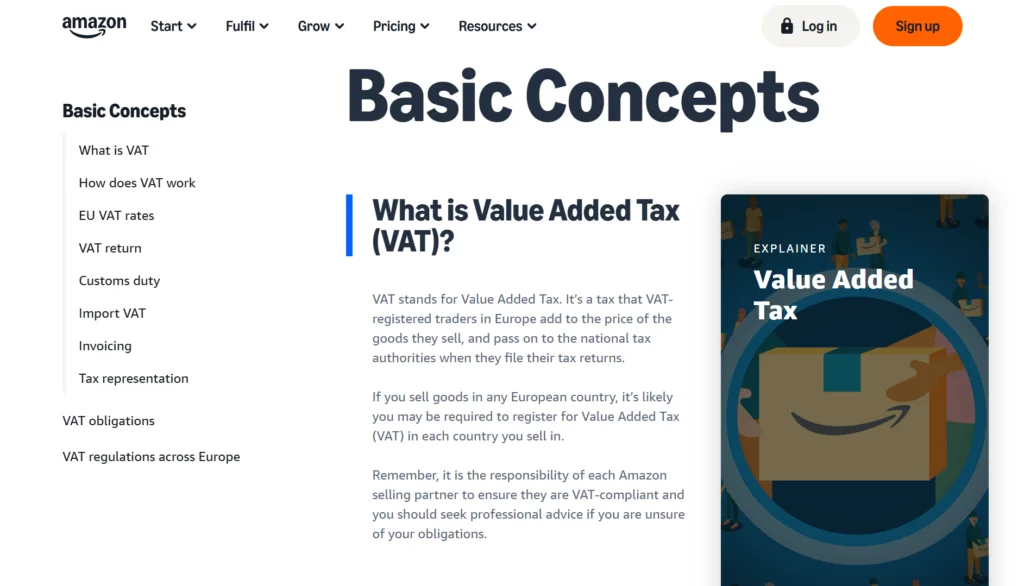
If your company has no UK establishment, meaning no UK office, no UK-based management, and no UK staff running the business, HMRC treats you as a non-established taxable person, or NETP. NETPs get no threshold at all. The obligation starts from your first taxable supply in the UK, which for most manufacturers means the moment inventory lands in an Amazon FBA warehouse with the intent to sell. Waiting for revenue to build up before registering is exactly the situation HMRC penalizes with backdated liabilities and interest.
This is where Amazon Consulting support becomes useful for manufacturers entering the UK market for the first time, confirming your establishment status correctly, before you commit stock, which avoids the most expensive Amazon UK VAT mistake there is.
How to Set Up Amazon UK VAT: Step-by-Step for Manufacturers
Setting up Amazon UK VAT isn’t technically difficult, but the order of operations matters. Here’s the sequence that works in practice:
1. Confirm your NETP status
Determine whether your business has any UK establishments. A registered UK company address, a virtual office, or a UK bank account alone does not create one; HMRC looks at where essential management decisions are actually made and whether you have staff or physical resources in the UK.
Most manufacturers shipping from a factory in Turkey, the US, or elsewhere will qualify as an NETP, which means the registration obligation starts immediately, not after a sales threshold.
2. Gather your registration documents
You’ll need a certificate of incorporation or equivalent business registration document, valid identification for directors and major shareholders, your registered business address (your overseas factory or head office address is fine), and business bank account details in the company’s name, since VAT refunds are paid directly into that account. Manufacturers frequently lose weeks here simply because a director’s ID has expired or the incorporation certificate isn’t an official translated copy.
3. Prepare supply chain evidence
Manufacturers importing goods should have shipping documents, bills of lading, and supplier invoices ready, along with a clear description of your product category and expected import volumes. HMRC checks that your VAT registration matches how you actually plan to sell, including where inventory is stored, who holds the goods on arrival, and whether you’re shipping direct-to-consumer or exclusively through Amazon FBA.
4. Sign in to your HMRC Online Services account
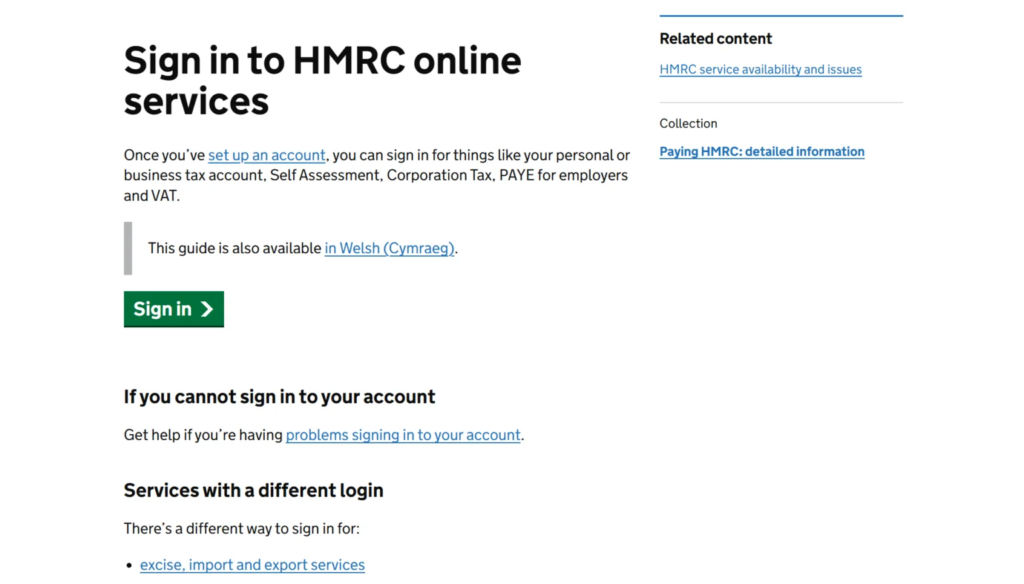
Before submitting your VAT registration, sign in to your HMRC Online Services (Government Gateway) account. If you don’t already have one, create an account first. Once signed in, you can access the VAT registration service and begin your application.
5. Submit the VAT1 application through HMRC
State clearly that you’ll be using Amazon FBA and storing stock in UK fulfilment centres, vague or generic answers about “selling online” trigger follow-up requests that can add weeks to the timeline. If you’re applying as an overseas manufacturer, expect HMRC to ask specifically about your NETP status and may require a paper VAT1 form instead of the online route in some cases.
6. Link your VAT number to Amazon Seller Central
Add it to your account’s tax settings so Amazon can calculate VAT correctly at checkout. This also determines how your VAT invoice requirements are met, each invoice needs to show your company name, VAT number, VAT amount, and the applicable rate, and missing details here are a common trigger for buyer disputes and audits.
Double-check that the VAT rate applied matches your product category, since misclassified items (common in beauty and FMCG ranges with mixed standard and reduced-rate SKUs) create reconciliation headaches later.
7. Set up postponed VAT accounting for imports
This lets you declare import VAT on your VAT return instead of paying it upfront at the border, which matters a lot for cash flow when you’re shipping full container loads into the UK. You’ll need to authorize this on your customs declarations and keep monthly postponed import VAT statements from HMRC to support your VAT return filings.
Common Amazon UK VAT Registration Mistakes That Trigger Suspension
Manufacturers tend to run into the same handful of problems, and most of them trace back to timing rather than a lack of effort. Two mistakes stand out as the most costly.
Assuming the £90,000 threshold applies
This is the single most expensive misunderstanding in Amazon UK VAT registration. Overseas manufacturers who wait to cross a turnover threshold that doesn’t apply to them can end up with months of backdated VAT owed to HMRC, plus interest, calculated on sales where no VAT was ever collected from customers.
Sending stock before registration is active
Amazon FBA VAT UK obligations start the moment goods are positioned in a UK warehouse with the intent to sell, not the moment the first order ships. Manufacturers who send inventory ahead of registration risk Amazon restricting their account until valid VAT documentation is on file, which can freeze inventory mid-launch.
A related issue is inconsistent recordkeeping once you are registered, invoices missing your VAT number, incorrect rates applied to specific product categories, or gaps between what Amazon reports and what gets filed with HMRC. This is usually where ongoing Full Account Management support pays for itself, since account health issues from tax mismatches are harder to unwind than they are to prevent.
Practical Checklist Before You Submit VAT1
Before starting Amazon UK VAT registration, confirm you have:
- Certificate of incorporation or equivalent business registration document
- Valid ID for directors and major shareholders
- A registered business address (overseas addresses are accepted)
- Business bank account details in the company’s name
- Description of your UK sales activity and expected Amazon FBA usage
- Shipping and customs documentation for imported goods
- Confirmation of Amazon Seller Central account details
Getting the VAT number is the administrative half of a UK launch. Running the account well once it clears is the other half — what an Amazon agency in the UK actually does covers what that second half involves.
VAT is one layer of several that have to line up before a European launch holds together. The full map sits in our Amazon EU compliance guide.
Conclusion
Treat Amazon UK VAT as part of your launch timeline, not an afterthought once sales pick up. Registering before your first shipment lands protects your account from suspension, keeps your pricing accurate from day one, and avoids the backdated liabilities that catch manufacturers who assume a UK sales threshold will save them time.
This guide is for general information only and is not tax or legal advice. VAT treatment depends on your specific business structure and circumstances. Confirm your registration obligations with HMRC or a qualified tax adviser before acting. Get help with Amazon UK VAT setup and broader EU compliance. Book a free Amazon UK/EU compliance consultation before you send your first shipment.
1. Do I need a UK VAT number before using Amazon FBA?
Yes. If your business has no UK establishment and you plan to store inventory in a UK fulfilment centre, Amazon UK VAT registration is generally required before your goods arrive, not after your first sale.
2. Does Amazon pay VAT on my behalf?
Only in specific cases, such as low-value consignments where Amazon acts as a deemed supplier. For standard FBA sales, registration, filing, and payment to HMRC remain the manufacturer’s responsibility.
3. Can I reclaim import VAT as a manufacturer?
Yes, if your company is the importer of record and holds a valid UK VAT number. Postponed VAT accounting allows you to declare import VAT on your return rather than paying it upfront.
4. How long does UK VAT registration take?
Processing times vary, but manufacturers should generally expect several weeks from submission to an active VAT number, longer if documentation is incomplete or your NETP status needs clarification. Building in this lead time before your planned FBA launch date avoids the scramble of trying to register after stock is already in transit
Which registrations does Amazon want from you?
Answer three questions and get a country-by-country list for the EU and UK — packaging, batteries, electricals, product safety, cosmetics. Free, no sign-up.
Check my registrations →