For Shopify brands, fulfillment is more than just shipping orders. It’s a question of cost, speed, and how well your operations can scale as volume grows.
FBA, 3PL, and FBM each come with their own trade-offs. The real challenge is understanding what they actually cost per order. Storage fees, pick and pack, shipping, returns, it all adds up faster than most brands expect.
I’ll break down FBA, 3PL, and FBM from a cost perspective. You’ll also learn how to use a Fulfillment Cost per Order Calculator to make a data-driven decision for your Shopify brand, without overcomplicating the math.
What Is Fulfillment Cost per Order?
Fulfillment cost per order is the total amount you pay to get one order picked, packed, and delivered to your customer. It sounds simple, but the number often hides more than expected. This cost usually includes storage, order handling, packaging, shipping, and returns. Some fees are fixed, while others change as your order volume grows.
Have you ever noticed costs rising even when sales stay flat? That’s often a fulfillment issue. Knowing your fulfillment cost per order helps you price products correctly, protect margins, and choose between FBA, 3PL, or FBM with confidence.
Amazon FBA (via MCF): Cost Breakdown for Shopify Orders
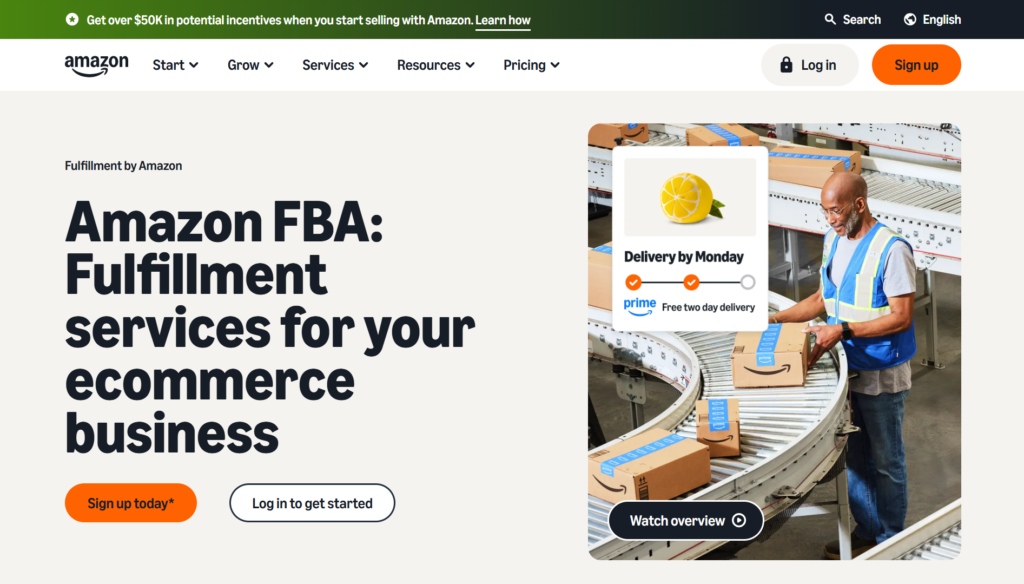
Source: Amazon
Before looking at numbers, let’s first understand how FBA actually works when it’s connected to a Shopify store.
How Amazon FBA Works for Shopify Brands
If you’re selling on Shopify but want to leverage Amazon’s operating system, FBA via MCF (Multi-Channel Fulfillment) is a worthwhile option. It works quite simply. You ship your goods to Amazon’s warehouse as usual. When you receive an order from Shopify, Amazon handles packaging and shipping to your customer, even if the order didn’t come from Amazon Marketplace.
What’s the great thing? You don’t need to build additional warehouses, hire more staff, or negotiate with shipping companies. Amazon handles the “behind-the-scenes” work, allowing you to focus on sales and marketing. Sounds much easier, right?
Fulfillment Cost per Order – FBA Components
The FBA cost per Shopify order isn’t just shipping fees. It’s made up of several parts. First is inbound shipping, the cost of shipping goods from your warehouse to Amazon’s warehouse. This is often overlooked in calculations.
Next is the storage fee. Amazon charges a monthly storage fee, which increases significantly during peak seasons. If inventory turnover is slow, this cost will eat into your profit margin quite quickly.
To optimize inventory management, refer to [Inventory Planning: Avoiding OOS During Promotions]
The majority of costs are in the fulfillment fee. This fee includes pick-up, packing, packaging, and shipping. It depends on the size and weight of the product. With MCF, the fee is usually slightly higher than a regular Amazon order.
Finally, there are returns. If a customer returns an item, Amazon still charges a processing fee. You should factor this into your calculator, especially in industries with high return rates.
Pros
The biggest advantage of FBA via MCF is speed and stability. Amazon delivers very quickly in most cases, though MCF orders may not receive the same priority as Amazon marketplace orders, especially during peak periods. Fees are clearly listed, and there are few unexpected charges.
Cons
The first drawback is the high cost for small brands. With low order volumes, FBA can be more expensive than FBM or some 3PLs. You also have less control over branding. Packaging, inserts, and unboxing experience are almost entirely Amazon-standard. Finally, you are dependent on the Amazon system. When Amazon changes fees or policies, you are forced to adapt.
3PL Fulfillment: Flexible, But Watch the Cost Stack
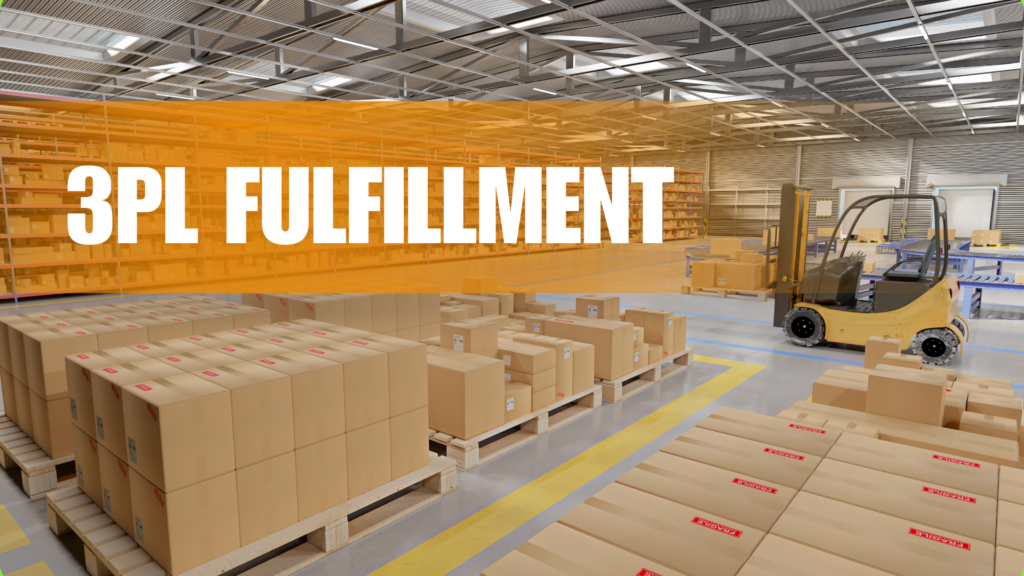
Many Shopify brands move to a 3PL when they want flexibility without running a warehouse themselves. That said, flexibility usually comes with a more complex cost structure. Let’s walk through how it really works.
How 3PLs Integrate with Shopify
Most modern 3PLs integrate directly with Shopify through native apps or simple API connections. Once connected, orders flow automatically from your store to the 3PL’s system. They pick, pack, and ship without you touching each order.
Many 3PLs also offer multi-warehouse fulfillment. This means your inventory can be split across locations to reduce shipping zones and delivery time. Some even support custom packaging and branded inserts. That’s a big plus if brand experience matters to you.
Sounds ideal, right? It can be. But integrations alone don’t tell the full cost story.
3PL Fulfillment Cost per Order Breakdown
This is where things get tricky. A 3PL fulfillment cost per order is rarely one clean number. You’ll usually start with inbound freight, which covers shipping inventory into the 3PL’s warehouse. Then comes storage, charged by bin, shelf, or pallet. Rates vary widely by provider and location.
Next are pick and pack fees. Some charge per item, others per order. Packaging materials may be included or billed separately.
Shipping is another layer. 3PLs often pass through carrier rates, but many add a markup. On top of that, you may see software, account management, or minimum monthly fees. Miss one line item, and your cost per order jumps fast.
Pros
The biggest advantage of 3PLs is flexibility. You keep control over branding, packaging, and unboxing. They are also multi-channel ready. Shopify, marketplaces, wholesale orders can all flow through one system. Returns are often easier to manage compared to FBA, especially if you want inspection or restocking control.
Cons
The downside is cost complexity. Fees stack quickly and aren’t always obvious upfront. Some 3PLs have hidden minimums that only show up at scale. Others struggle with service consistency as volume grows. If you don’t track your numbers closely, 3PL costs can quietly creep up. And by the time you notice, margins may already be under pressure.
FBM (Self-Fulfillment): Lowest Cost or Hidden Risk?
At first glance, FBM looks like the cheapest fulfillment option. You ship orders yourself, avoid third-party fees, and stay in full control. For many Shopify brands, this feels like the most “logical” place to start. But is FBM really low cost, or does it just hide the risk better?
What FBM Means for Shopify Brands
FBM stands for Fulfilled by Merchant. In simple terms, you handle everything. Orders come into Shopify, and you pick, pack, and ship them yourself. This usually happens in a small warehouse, an office, or even a garage. Early on, this setup feels manageable. You know where every box is. You control packaging and shipping speed.
The appeal is control and simplicity. No contracts. No complicated fee tables. But the real cost of FBM isn’t always obvious on day one.
FBM Fulfillment Cost per Order Components
FBM costs don’t show up as a single line item. They are spread across your operation. First, there’s rent and utilities. Even a small space adds monthly fixed costs. Next is labor. Whether it’s your time or hired help, labor always has a price. It just doesn’t always show up in spreadsheets.
You’ll also pay for packaging supplies, like boxes, tape, and labels. Shipping rates are another factor. Most FBM brands pay non-discounted carrier rates, which can be higher than FBA or 3PL pricing.
Add fulfillment software, plus the cost of errors, delays, and reships. Together, these shape your true FBM fulfillment cost per order.
When FBM Makes Sense
FBM works best for early-stage brands. Order volume is low, and cash flow matters. It also fits brands with high AOV products, where shipping cost is a smaller percentage of revenue. If you want maximum control and are still testing demand, FBM can be a smart starting point.
Why FBM Breaks at Scale
As volume grows, cracks appear. Orders pile up. Mistakes increase. Shipping gets slower. In growing companies, logistics inefficiencies alone can reduce profit margins by 15-25%. At that point, FBM stops being cheap. It becomes expensive in ways that don’t show up on invoices, but still hurt the business.
FBM also creates founder time drain. Every hour spent packing boxes is time not spent growing the brand.
Customer experience can become inconsistent, especially during peak seasons. At that point, FBM stops being cheap. It becomes expensive in ways that don’t show up on invoices, but still hurt the business.
Fulfillment Cost per Order Comparison Table
Below is a simplified comparison to help you see how FBA, 3PL, and FBM stack up on a per-order cost basis. Think of this as a starting framework, not an exact quote. Your real numbers will depend on volume, product size, and order mix.
| Cost Component | FBA (via MCF) | 3PL Fulfillment | FBM |
| Inbound Shipping | Medium | Medium | Low-Medium |
| Storage Fees | Medium-High (seasonal spikes) | Medium (bin/pallet-based) | Low (fixed rent) |
| Pick & Pack | Included (fixed fee) | Variable (per order/item) | Labor-dependent |
| Packaging | Included (standard) | Often extra | Self-paid |
| Shipping Rates | Included | Carrier + markup | Usually highest |
| Returns Handling | Paid per return | Variable | Self-managed |
| Software / Overhead | Low | Medium | Medium–High |
| Cost Predictability | High | Medium | Low |
| Branding Control | Low | High | High |
| Scalability | High | High (with management) | Low |
How to Build a Fulfillment Cost per Order Calculator
A fulfillment cost per order calculator doesn’t need to feel technical.
Key Inputs
Monthly order volume sets the context. Costs behave very differently at 300 orders a month versus 3,000. Storage, labor, and shipping all scale in their own way. This is why volume should always be part of the picture.
Product weight and dimensions quietly shape almost every fulfillment fee. A small change in size can move you into a higher shipping tier. Many brands discover margin issues right here. Have you checked how close your products are to the next pricing threshold?
Shipping zones matter more than most expect. Orders going across multiple zones cost more, especially with FBM and 3PLs. If most of your customers are far from your inventory, your cost per order will reflect that.
Storage duration tells you how efficient your inventory really is. Fast-moving products keep costs tight. Slow movers do the opposite, especially with FBA and long-term 3PL storage.
Return rate completes the picture. Returns aren’t rare events. They are part of eCommerce. Ignoring them usually leads to overly optimistic numbers.
Simple Formula
The calculator itself stays straightforward. That’s intentional.
Fulfillment Cost per Order = Inbound + Storage + Pick & Pack + Packaging + Shipping + Returns + Overhead
Inbound covers the cost of getting inventory into the system. Storage reflects time, not just space. Pick and pack is the physical handling of each order. Packaging and shipping move the product to the customer. Returns account for reverse logistics. Overhead captures software, management, and operational friction.
Use this same structure for FBA, 3PL, and FBM. When the inputs are honest, the right fulfillment model usually reveals itself.
Conclusion
There’s no single “best” fulfillment model for every Shopify brand. FBA, 3PL, and FBM all work well in the right context. The difference is knowing what each one truly costs per order, not just what feels convenient today.
Once you break every fee down to a per-order level, things get clearer. Margins make more sense. Pricing decisions feel less risky. You stop guessing and start choosing based on data.
So before switching fulfillment partners or scaling volume, pause for a moment. Run the numbers honestly. When you understand your fulfillment cost per order, the right model usually becomes obvious.
FAQs
1. Which fulfillment model is cheapest for Shopify brands?
There isn’t a universal answer. FBM often looks cheapest at low volume, FBA becomes cost-efficient at scale, and 3PL sits in between. The real answer depends on your fulfillment cost per order, not the headline fees.
2. Why does fulfillment cost per order increase even when sales stay flat?
This usually comes from hidden drivers like storage time, returns, or higher shipping zones. When volume doesn’t grow, but complexity does, costs rise quietly in the background.
3. How often should I recalculate my fulfillment cost per order?
Anytime something changes. New pricing tiers, higher volume, seasonal fees, or product size updates all affect the number. Most growing Shopify brands should review it at least once per quarter.