When you sell aerosols or alcohol-based products on Amazon, dangerous goods requirements are something you cannot ignore. Many sellers get stuck at listing or face sudden suspensions simply because they didn’t understand how Amazon classifies these items.
In this guide, I’ll walk you through the key Amazon dangerous goods rules for aerosols and alcohol in a clear, practical way. You’ll learn why these products are considered hazardous materials, what documents Amazon may request, and how to prepare your listings correctly.
Why Do Dangerous Goods Requirements Exist On Amazon FBA
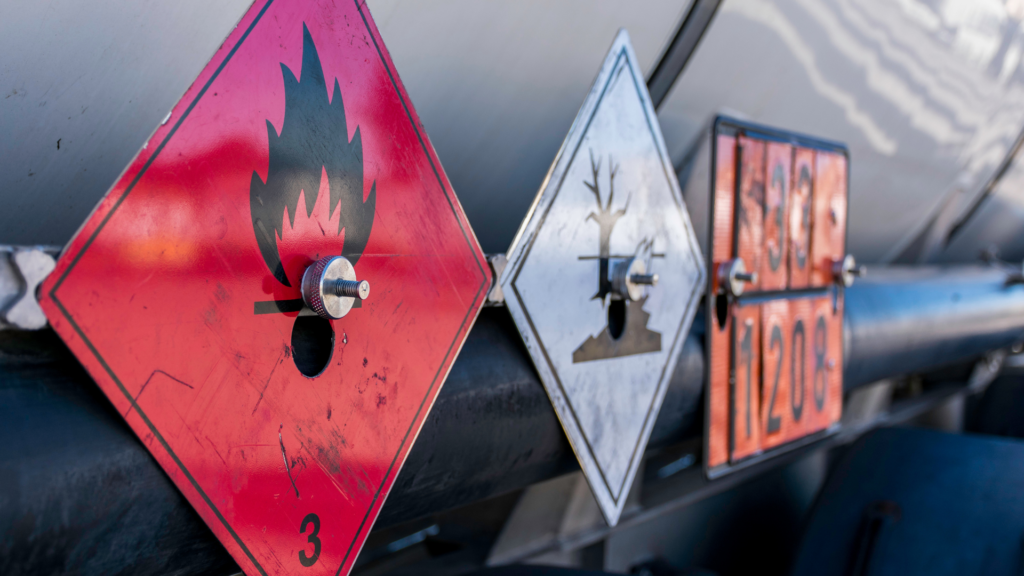
Before diving into classifications and documents, it’s important to understand why Amazon cares so much about dangerous goods.
What Amazon Means By “Dangerous Goods” And “Hazmat.”
From Amazon’s perspective, dangerous goods (often called hazmat) are products that can pose risks during storage, handling, or transportation. I’m talking about items that are flammable, pressurized, corrosive, or reactive. Aerosols and alcohol-based products fall squarely into this category because they can ignite, leak, or build pressure under certain conditions.
Amazon doesn’t invent these rules on a whim; they align closely with international transport regulations like ADR, IATA, and GHS. If a product can endanger warehouse staff, carriers, or nearby inventory, Amazon treats it as hazardous until proven otherwise.
Why Amazon Strictly Enforces Dangerous Goods Compliance
Amazon operates massive fulfillment centers with millions of units moving daily. One leaking aerosol or improperly labeled alcohol product can shut down an entire section of a warehouse. I’ve seen sellers frustrated by strict reviews, but from Amazon’s side, consistency is everything. Compliance protects employees, prevents fires or chemical exposure, and reduces legal risk.
What Happens If Sellers Ignore Dangerous Goods Requirements
Ignoring dangerous goods rules almost always backfires. Listings get stuck in review, inventory becomes unfulfillable, or shipments are rejected at the warehouse door. In more serious cases, Amazon can suspend ASINs or even your selling account for compliance violations. Get it right early, and you avoid costly delays and long-term account risk.
How Amazon Classifies Dangerous Goods
To handle dangerous goods correctly, I always begin with Amazon’s classification logic. Amazon doesn’t evaluate products based on how they’re marketed or who uses them. The decision is driven by chemical composition and physical risk during storage and transportation.
Overview Of Amazon’s Dangerous Goods Hazard Classes
Amazon aligns its system with international hazard standards, but sellers usually deal with only a few key classes. The most common ones include:
- Flammable liquids (for example, alcohol-based formulas)
- Flammable gases
- Pressurized containers
These classes matter because they represent real operational risks in FBA warehouses. Amazon’s main question is simple:
- Can the product ignite?
- Can it leak or release vapor?
- Can pressure build up and cause rupture?
If any answer is yes, the ASIN is likely to be reviewed as dangerous goods.
How Aerosols Are Typically Classified
Aerosols almost always fall under dangerous goods. Amazon typically classifies them as:
- Pressurized containers
- Products with flammable propellants (such as butane or propane)
Even aerosols labeled “non-flammable” still contain internal pressure, which is enough to trigger a hazmat review. This is why most aerosol ASINs require an SDS and manual approval before FBA is allowed.
How Alcohol-Based Products Are Classified
Alcohol-based products are usually assessed as flammable liquids, depending on their formulation. Amazon focuses on:
- Alcohol concentration
- Flash point listed in the SDS
Lower alcohol percentages may qualify as non-dangerous, while higher concentrations trigger compliance requirements. A mistake I see often is assuming cosmetics or personal care items are exempt. Amazon doesn’t classify by category; it classifies by chemical risk.
Which Dangerous Goods Does Amazon Allow And Which Are Prohibited
One of the biggest mistakes I see sellers make is assuming that all dangerous goods are automatically banned from Amazon FBA. That’s not how it works. Amazon draws a clear line between dangerous goods that can be controlled and products that create risks no warehouse process can safely manage.
Dangerous Goods That May Be Accepted Through Amazon FBA
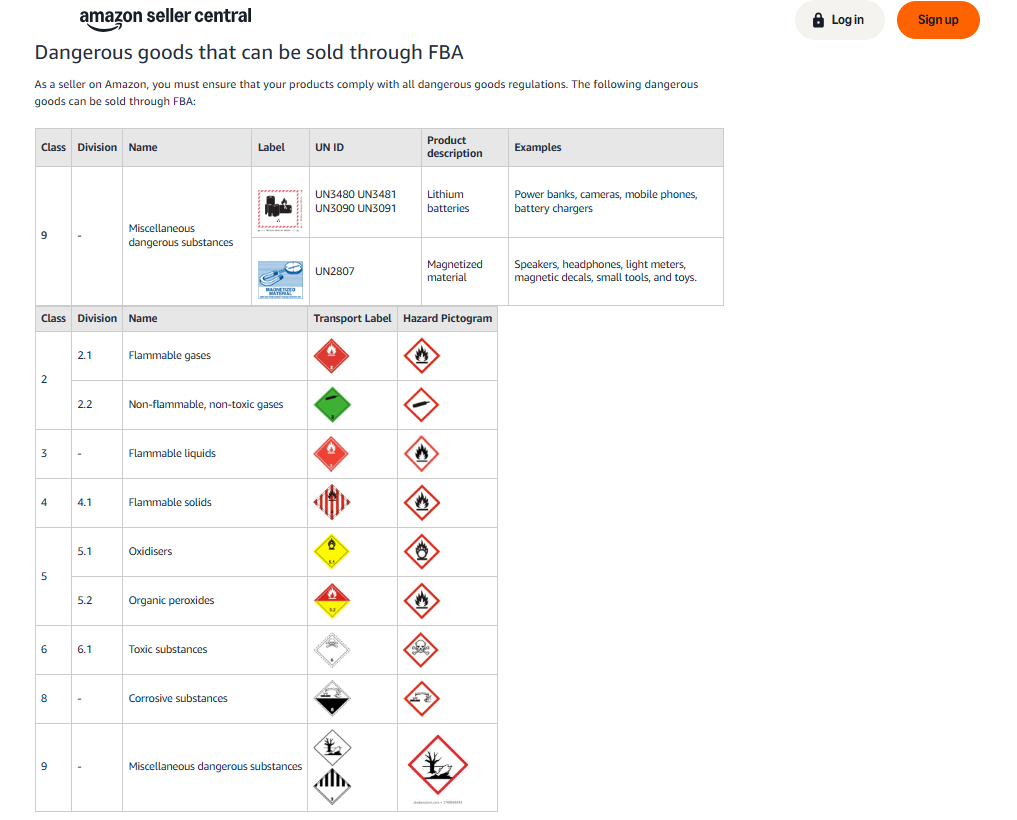
Source: Amazon
Some hazardous products are allowed, but only under strict conditions. These items usually qualify through Amazon’s Dangerous Goods Program and require approval before inventory is sent. Typical examples include:
- Certain flammable liquids below specific flash point thresholds
- Aerosols that meet packaging and labeling standards
- Limited consumer chemicals with proper containment
Approval depends on accurate documentation, especially a compliant Safety Data Sheet (SDS). Once approved, Amazon may still apply quantity limits, storage restrictions, or specific carrier rules. I always recommend waiting for written approval in Seller Central before shipping anything.
Dangerous Goods Amazon Does Not Allow
Some categories are non-negotiable. Amazon does not allow the following under any circumstances:
- Explosives, including fireworks and detonators
- Highly toxic substances that pose acute health risks
- Radioactive materials
- Products dangerous when wet, which can ignite or release gas on contact with water
Why Can Eligibility Vary By Product Details
Even within allowed categories, eligibility can change quickly. Amazon evaluates products based on exact details, including:
- Formula changes that alter hazard classification
- Packaging changes that affect leakage or pressure resistance
- Supplier differences that impact raw material composition
That’s why two similar-looking products can receive completely different outcomes in FBA.
How To Prepare The Required Documentation
Getting documentation right is where most dangerous goods reviews are won or lost.
Safety Data Sheet (Sds) Requirements
The Safety Data Sheet (SDS) is the most important document Amazon will ask for. It must follow the 16-section GHS format and match your exact product. Amazon uses the SDS to evaluate hazard class, flash point, and handling risks. To avoid rejection, I check that:
- The product name matches the ASIN and label exactly
- All 16 sections are present and clearly filled out
- The SDS is issued by the manufacturer or a qualified lab
- The document is current, usually within the last 5 years
Generic or mismatched SDS files are the number one reason reviews fail.
When An Exemption Sheet Can Be Used
An exemption sheet works only for products that contain no hazardous chemicals at all. This document confirms that the item does not meet dangerous goods criteria. Sellers often misuse exemption sheets for borderline products like low-alcohol liquids or mild sprays. Amazon usually rejects those.
Additional Information Amazon May Request
In some reviews, Amazon asks for extra technical details to finalize classification. Common requests include:
- UN number
- Flash point value
- Hazard pictograms or signal words
- Test reports, if data is missing from the SDS
Providing this information quickly helps avoid long review delays.
How The Amazon Dangerous Goods Review Process Works
The dangerous goods review process feels confusing until you see how Amazon triggers and runs it.
What Triggers A Dangerous Goods Review
Several common events can send an ASIN into review. The most frequent triggers I see are:
- New ASINs, especially for liquids, sprays, or chemicals
- Category changes that shift the product into a higher-risk classification
- Keyword triggers like “spray,” “alcohol,” “flammable,” or “aerosol.”
- Random compliance audits performed by Amazon
Even small listing edits can activate these systems. Amazon relies heavily on automation, so intent doesn’t matter; risk signals do.
Step-By-Step Review Process Inside Seller Central
Once a review starts, everything happens inside Seller Central. The process usually follows three clear steps:
- Submission: Amazon requests an SDS, exemption sheet, or technical data
- Evaluation: The compliance team checks hazard class, flash point, and packaging risl
- Classification outcome: Amazon assigns a final dangerous goods status
This stage requires patience. Uploading corrected documents too quickly without fixing errors often resets the review.
Possible Review Outcomes And What They Mean
At the end of the process, Amazon assigns one of three outcomes:
- Non-dangerous: The product can be fulfilled normally through FBA
- Dangerous goods (FBA-eligible): The item is allowed with storage or shipping limits
- Unfulfillable inventory: Amazon will not store or ship the product via FBA
Packaging, Labeling, And Shipping Requirements For Dangerous Goods
Even a perfect SDS can be blocked during Amazon’s dangerous goods review due to poor packaging or incorrect labeling.
Expected Amazon Packaging Standards
Leak-proof wrapping: Amazon anticipates aerosols and alcohol-based products to be completely sealed in both normal and stress conditions. Caps, valves and seals should be so designed that they do not leak even when the unit is kept sideways or upside down.
Pressure resistance: Aerosols cannot compromise pressure resistance. Containers should be able to resist internal pressure without being deformed or ruptured. Even aerosols classified as non-flammable are still assessed for pressure risks; therefore, poor-quality valves or weak cans are immediately rejected.
Secondary containment: Amazon frequently needs a secondary containment of liquids. This is an additional coating, e.g. polybag or an inner tray covered with a lid to trap leaks. This reduces the risk of a damaged unit contaminating other inventory.
Dangerous Goods Labeling Requirements
Hazard labels: In case your product is defined as a hazard, the external packaging must have the hazard labels clearly. Amazon will verify the presence, durability, and positioning of hazard labels, which must not be hidden under shrink wrap.
CLP / GHS pictograms: Amazon is no exception. CLP or GHS pictograms should correspond to the hazard class in the SDS. Another common mistake I have noticed is the use of outdated or incorrect symbols, which often leads to a failed review.
Correlation on label and SDS: The correlation should be correct on labels and SDS. Signal words, hazard statements, and the names of products have to be the same. Any discrepancy signals an alarm when compliance checks are done.
Shipping and Fulfillment Limitations
Restrictions on carriers: Aerosols and flammable liquids are not accepted on all carriers. Amazon can limit the choice of carriers depending on the hazards of the cargo and the destination.
Limitations on quantity: Approved products are frequently limited in the quantity shipped or in ASIN. These are limits that minimize risk within fulfillment centers.
Storage restrictions in FBA warehouses: There are certain facilities where only some dangerous goods are stored. This will have an influence on the speed of restock and long-term planning of storage.
Dangerous goods classification sits alongside VAT, EPR and labelling obligations. All of them are mapped in our Amazon EU compliance guide.
Conclusion
It is possible to sell aerosols or alcohol-based products on Amazon FBA; however, on the first day, there are dangerous goods regulations. Approvals become quicker when documents are in agreement with the product and labels have shown the actual risk. Get hazmat right in the first place, and you secure your listings, merchandise flow, and seller account in the long term.
1. Why does Amazon classify aerosols and alcohol-based products as dangerous goods?
These products can be flammable, pressurized, or prone to leakage, which creates safety risks during storage and transportation in Amazon fulfillment centers.
2. What document is most critical for passing Amazon’s dangerous goods review?
A compliant Safety Data Sheet (SDS) that matches the exact product and follows the 16-section GHS format is essential for approval.
3. Are all dangerous goods prohibited from Amazon FBA?
No. Some dangerous goods are allowed through FBA, but only after approval and under strict packaging, labeling, and quantity restrictions.