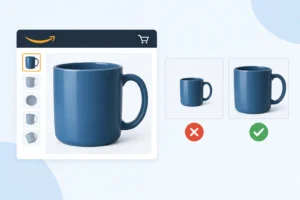
Many manufacturers jump onto Amazon expecting a new revenue stream, only to hit a wall sooner than planned. Not because the product is weak, but because they weren’t ready for how Amazon actually works.
Category structure, fulfillment, pricing logic, everything plays by a different set of rules than traditional wholesale. That’s where an Amazon Readiness Audit matters. This isn’t a surface-level checklist. It’s a hard look at your business through Amazon’s lens.
Why Manufacturers Fail on Amazon?
Many manufacturers assume Amazon is just another wholesale channel. Upload products, set a price, wait for sales. That mindset is usually where things start to break. Some industry estimates suggest that up to 90% of new Amazon sellers fail when they enter the marketplace without proper preparation, strategy, and operational alignment.

Manufacturers fail on Amazon because they underestimate how different the platform really is. Amazon rewards speed, data, and constant optimization. Traditional brands move slowly. Listings stay unchanged for months, images look like old catalogs, and keywords are treated as an afterthought. Meanwhile, agile sellers test, tweak, and adapt every week.
MAP policies and distributor conflicts often leave manufacturers overpriced, making them invisible in search or crushed by resellers who play the algorithm better. Add weak ad execution, poor review management, and inconsistent inventory, and even strong brands struggle to gain traction.
What Is an Amazon Readiness Audit for Manufacturers?
An Amazon Readiness Audit isn’t a report you skim and forget. It’s a reality check before Amazon exposes every weakness in your go-to-market plan.
For manufacturers, the audit looks at whether your brand is actually built to compete on Amazon, or just present. It goes beyond surface-level listing reviews and digs into the mechanics that decide who wins the Buy Box and who disappears from search.
Product & Market Fit Assessment
Before pouring money into ads or logistics, manufacturers need one hard answer: Does this product actually belong on Amazon?
A Product & Market Fit Assessment cuts through assumptions. You look at real demand, not gut feeling. Search volume, buyer intent, price sensitivity, and how crowded the niche feels when you scroll page one.
You compare your specs against top sellers and spot gaps customers still complain about. Packaging, MOQ, margins after fees, everything gets stress-tested. This step often kills weak ideas early, which is a good thing. Amazon rewards products that solve a clear problem fast.
Brand & Intellectual Property Readiness
On Amazon, a brand is more than a logo. It determines whether you control your listings or leave the door open for hijackers. The first checkpoint is trademark status. If your brand isn’t registered in your target market, you’re exposed to copycats, unauthorized sellers, and Buy Box issues. Amazon Brand Registry isn’t optional, it’s the foundation for real control.
Next, review your intellectual property assets. That includes packaging design, product images, listing content, and any patents you rely on. Many manufacturers run into trouble because they reuse assets from old distributors or agencies without clear ownership. On Amazon, a single IP complaint can take a listing down within hours.
Your brand name, logo, colors, and messaging should align across every touchpoint. Amazon favors brands that look clean, credible, and unmistakable. The earlier you standardize your brand and IP, the fewer fires you’ll be putting out later.
Supply Chain & Operational Readiness
One delayed shipment or inconsistent packaging can ripple across your listing, inventory health, and seller metrics. Supply chain readiness is not just about having stock. It’s about predictability. Lead times must be realistic, not optimistic. Packaging needs to survive Amazon’s fulfillment process without increasing damage rates or dimensional fees.
Your production schedule should align with demand spikes, not scramble to catch up after ads start converting. If you rely on overseas suppliers, customs clearance and buffer stock are non-negotiable.
Listing, Content & SEO Readiness
For manufacturers, weak listings are one of the fastest ways to fail an Amazon launch. A proper Amazon Readiness Audit always starts here, because no amount of ads can save unclear content. Your listing needs to answer buying questions fast, in Amazon’s language, not factory specs.
Start with the basics. Titles should be clean, readable, and keyword-driven without looking stuffed. Bullet points must focus on use cases and outcomes, not just features. If shoppers have to guess how your product fits their needs, they leave.
Images matter more than most manufacturers expect. Lifestyle shots, infographics, and comparison visuals do the heavy lifting before a single word is read. A+ Content should reinforce trust, especially if your brand is new to Amazon.
SEO is not about chasing every keyword. It’s about relevance and conversion.
Key checks:
- Primary keywords are placed naturally in the title, bullets, and backend
- Clear value proposition in the first two bullets
- Image set optimized for mobile viewing
- A+ Content aligned with brand positioning, not copied from brochures
Pricing, Margin & Advertising Readiness
Pricing is where many manufacturers stumble when moving onto Amazon. A good product can still fail if the numbers don’t work inside Amazon’s cost structure. Before launching, you need a clear view of true margin, not factory margin. That means baking in FBA fees, referral fees, storage, returns, and inevitable price competition.
Your price also has to make sense in the category. Too high, conversion drops. Too low, ads become unsustainable. There’s no room for guesswork here. You should already know your breakeven price and how aggressive you can be during the first 60-90 days.
If your margin can’t support PPC testing, you’re not ready. Early-stage ads are about data, not profit. Manufacturers who expect ads to “just work” usually burn budget fast. Go in with a clear target ACoS, a test budget, and a plan to adjust pricing if the market pushes back.
Data, Analytics & Performance Tracking
Before selling on Amazon, manufacturers need clean tracking from day one. You should know which ASIN drives revenue, which keyword converts, and where margin is leaking. If everything sits inside one blended dashboard, decisions get slow and expensive. Break it down early.

At minimum, you need clarity on sessions, conversion rate, TACoS, inventory velocity, and return reasons. These numbers tell you when to scale, when to pause ads, and when pricing needs adjustment. Without them, you’re reacting to symptoms, not causes.
Performance tracking is not about daily micromanagement. It’s about spotting patterns before they hurt cash flow. Manufacturers who treat data as an afterthought usually learn the hard way, right after the first restock goes wrong.
Example: Why We Told a Skincare Brand to Delay Its Launch
A skincare manufacturer with strong products asked us to launch it on Amazon US. A readiness review turned up four problems. None was unfixable, but launching before fixing them would have caused damage that is hard to undo.
- Listings were not retail-ready: non-white backgrounds, missing angles, copy translated literally rather than written for US buyers, and no A+ Content.
- The trademark was registered only in the home country, so the brand could not enrol in Brand Registry: no A+ Content, no Brand Store and no tools against hijackers.
- The supply chain was not set up for FBA: long production lead times, no buffer stock and no experience with international freight forwarders. A two-to-three-week stockout in the first weeks would have wiped out early ranking.
- Prices were cost-plus, 25-30% above comparable products with no reviews or brand recognition to justify the gap.
Why a bad launch is worse than no launch
A weak listing, wrong price and slow fulfilment collect poor reviews in the first weeks, and those reviews stay. They pull down rank and search visibility long after the problems are fixed. The first weeks after launch are also when Amazon learns how a product converts; waste them and getting momentum back costs far more effort and budget.
Go/ No-Go Decision Framework
The hardest part of an Amazon audit is knowing when to stop. A Go / No-Go framework forces that decision before real money is on the line.
This isn’t about confidence or brand ambition. It’s about signals. Do the unit economics survive Amazon fees and ads? Can the product compete on price without killing margin? Is there enough demand to justify inventory risk? If any of those answers are unclear, that’s already a warning.
A Go decision means the basics are proven. Costs are mapped, pricing is realistic, ads are funded, and operations can handle scale. A No-Go doesn’t mean failure. It means timing is wrong, or the model needs adjustment.
A readiness audit tells you whether to launch. If you have already launched and the numbers stalled, you want the other kind of review — see Amazon consulting.
Conclusion
Amazon doesn’t fail manufacturers. Unprepared launches do. An Amazon Readiness Audit exposes gaps before they turn into real losses. When the fundamentals are aligned, Amazon becomes a scalable channel instead of a cost center. When they aren’t, even strong products struggle under fees, ads, and inventory pressure. The audit gives manufacturers clarity early, while there’s still time to adjust pricing, fix operations, or walk away without damage.
1. When does a manufacturer actually need an Amazon Readiness Audit?
Before launching on Amazon, or as soon as results don’t match product quality. If you don’t have clarity on true margins after FBA and ads, lack Buy Box control, or are losing pricing power to resellers, those are clear signs you’re not Amazon-ready and need an audit immediately.
2. How is an Amazon Readiness Audit different from basic listing optimization?
Listing optimization fixes surface-level issues. An Amazon Readiness Audit evaluates the entire business model. It covers product–market fit, Brand Registry and IP protection, supply chain reliability, pricing logic, and whether your margins can survive PPC during the first 60-90 days. It answers whether you should sell on Amazon, not just how.
3. If the audit result is No-Go, does that mean failure?
No. A No-Go decision is often the smartest outcome. It highlights where the model breaks, pricing, margins, logistics, or positioning, before real money is lost. Many successful manufacturers win on Amazon not by launching early, but by fixing fundamentals first and scaling at the right time.