Have you ever scrolled through Amazon and only spent a few seconds deciding whether to click on a product? In reality, most shoppers spend just 5-10 seconds deciding whether to keep watching an ad. So, if your video doesn’t grab attention from the very first second, will they even stick around?
This is exactly why Sponsored Brands Video matter so much. Many brands assume that longer videos with multiple scenes “explain the product better.” But here’s the truth: online viewers rarely have patience, and your ad budget just slips away.
So how do you create a short, persuasive video that drives action? The answer lies in the formula: 10 seconds, 3 shots, 1 offer. It sounds simple, but when you use every second and every shot effectively, your video doesn’t just capture attention; it can significantly boost CTR and conversions.
In this article, we’ll walk you through how to craft an effective Sponsored Brands Video, from brainstorming ideas, writing the script, to optimizing your CTA and offer, so that viewers can’t look away.
The 10 Seconds, 3 Shots, 1 Offer Rule
When it comes to Sponsored Brands Video, attention spans are short, really short. That’s why top-performing videos follow the 10 Seconds, 3 Shots, 1 Offer rule. Let’s break it down so you can create a video that grabs attention and drives action.

10 Seconds
You’ve probably scrolled past countless videos that felt too long or boring. On Amazon, you have only 10 seconds to make a first impression. That’s right, 10 seconds to hook your viewer, show your product, and make them want to click.
Ask yourself: if someone only watched your video for 10 seconds, what’s the one thing they should remember? Keep it fast, clear, and engaging.
3 Shots
Within those 10 seconds, use 3 distinct shots. Why three? It’s enough to tell a mini-story without overwhelming the viewer. Here’s the best structure:
- Shot 1, The Hook: Grab attention immediately. This could be a surprising action, a bold question, or a striking visual that makes the viewer stop scrolling.
- Shot 2, Highlight the Product/Benefit: Show the product in action and emphasize the key feature or benefit. Keep it clear and visually appealing. This is where you demonstrate why your product matters.
- Shot 3, Result & Call-to-Action: End with a happy customer experience, a before-and-after result, or the positive outcome of using your product. Lead naturally into 1 clear offer, like a discount, free shipping, or a compelling reason to buy now.
1 Offer
Every winning video has 1 clear offer. Don’t clutter it with multiple promotions. Ask yourself: what’s the one thing I want viewers to do after watching this video? Make it obvious, simple, and compelling.
Follow this formula, and your Sponsored Brands Video won’t just be another video; it will be a conversion machine.
Script Planning for Sponsored Brands Video
Planning a Sponsored Brands Video doesn’t have to be complicated. Yes, you’re working with just 10 seconds, but that’s more than enough to tell a tight, compelling story, if you plan it right. In this section, we’ll walk through each step so you can confidently build a high-impact script that catches attention and converts. Ready? Let’s dive in.
Step 1: Define Your Goal
Before you write a single line or think about visuals, get clear on your goal. Ask yourself: What do I want this video to accomplish?
- Are you trying to boost brand awareness?
- Do you want shoppers to understand your product’s value immediately?
- Or is your goal to drive purchases right now?
When your goal is specific, your script becomes sharper. Instead of saying, “I want more clicks,” try something measurable like, “I want to increase product detail page visits by 20% this week.” With a clear goal, every shot and every line in your script has a purpose; nothing is wasted.
Step 2: Select Your 3 Strategic Shots
Since your video is roughly 10 seconds, choosing the right three shots is everything. Think of these shots as your story structure: beginning, middle, and end.
- Hook Shot: This is your scroll-stopper. It needs to grab attention instantly. It could be a bold product close-up, a surprising moment, or a question that speaks to a shopper’s problem.
- Feature Shot: Show the product in action or highlight the key benefit. Ask yourself: If someone knew nothing about my product, what is the one thing they must understand? That’s the shot you want here.
- Offer / CTA Shot: End with clarity. Whether it’s a discount, a bundle, or simply an invitation to “Shop Now,” make your offer unmistakable. The last frame should guide the shopper toward exactly what you want them to do.
A simple test: If someone only sees one of these shots, can they still grasp your core message? If not, refine until the answer is yes.
Step 3: Write a Concise Script
Now that you’ve defined your shots, it’s time to script them. Make your writing concise, clear, and simple. Customers at Amazon browse and scroll even faster than on most platforms. Aim for one idea per video shot.
- Hook line: Catch the interest with a question or a provocative statement.
- Feature line: Describe the product value using the simplest possible terms.
- Offer line: Tell them exactly what to do.
You need a call-to-action. In its absence, the video might receive views, but it won’t drive conversions. Imagine your script as a sort of roadmap: “Here is what this is, here is why you want it, here is how to get it.”
Step 4: Choose Visuals and Audio
This is where your script comes alive. The right visuals and audio can turn a simple message into something unforgettable.
- Visuals: Use clear, product-focused shots that communicate instantly. Avoid clutter or complicated scenes; shoppers won’t have time to process them.
- Audio: Pick music or a voiceover that matches your brand’s tone. Energetic for fitness products, calm and warm for home goods, clean and minimal for tech items.
Ask yourself: If someone watches this video with the sound off, does it still make sense? And if they watch with sound on, does it feel even stronger? When the answer is yes to both, you’re ready to go.
Tips to Boost the Performance of Your Sponsored Brands Video
Production of a Sponsored Brands Video is one thing, but making it work is another. Let’s go over some tips that will take your video game to the next level immediately. And as you read, consider the following: Which of these can you implement in your next video immediately?
Make Your Message Laser-Focused
Make your message laser-focused. Bear in mind that you have just a few seconds before the shoppers scroll by. Rather than attempting to mention everything, select the point of value that is the most important.
Prioritize Clarity Over Creativity
Being clear rather than creative should be the priority. The effects of fancy transitions and cinematic shots are cool, but once the shoppers do not understand what you are offering in the first two seconds, the video has already missed its purpose. Make visuals clean, simple, and easily recognizable. Imagine how you shop, don’t you prefer videos that cut to the chase?
Design Your Sponsored Brands Video to Be Mobile-First
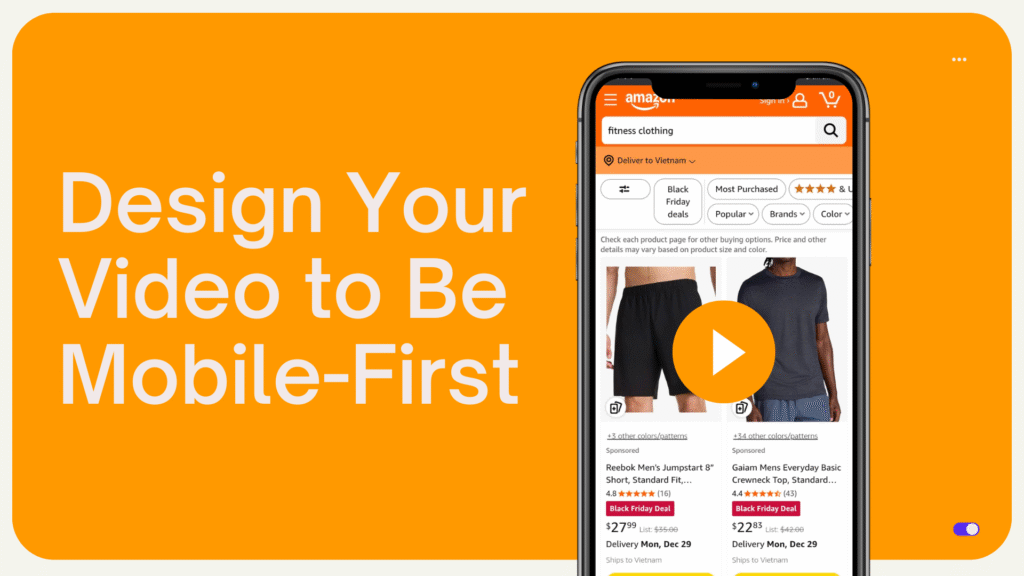
Design your video to be mobile-first. 53% of traffic comes from mobile devices, so small text, panoramic shots, or crowded interiors tend to get lost. Ensure that your hero product takes up the frame, your text is legible, and your offer remains clear even on a small screen.
Make Text Overlays Tactical
Make text overlays tactical. A short phrase of one or two words, such as Fast Relief in 10 Minutes or Made for Sensitive Skin, will help increase viewer retention. Be sure not to cram too many messages on the screen; one message is sufficient for each shot. In hesitation, ask yourself: would I see this in a single glance?
Select Audio That Reinforces Your Message
Select the audio that reinforces your message. Not all videos require a voice-over; sometimes you just need a clean and light track. However, when you do write a script, make it short and to the point. And keep in mind: lots of shoppers browse with their sound off, so graphics have to convey the whole story even then.
End With a Clear Offer or CTA
End with a clear offer or CTA. Do not think that shoppers know what they should do. Shop Now, Save 15% Today, See All Variants, or any other direct CTA gives your video a sense of purpose and direction. Without it, the next step for the viewer becomes unclear, and unclear means no action.
Test, Tweak, Repeat
Test, tweak, repeat. Performance cannot be predicted even by the most skilled marketers. Test different variations of hooks, product angles, and text overlays to see what your audience responds to. Minor adjustments can result in major changes.
Conclusion
Sponsored Brands Videos don’t need to be long—they just need to grab attention fast, deliver one clear message, and guide shoppers toward action. When you follow the 10 seconds, 3 shots, 1 offer formula, you give your video the structure it needs to perform consistently.
FAQs
What is the recommended length of Sponsored Brands Video?
It is advised by Amazon to remain between 6 and 15 seconds. The 10-second format is the most appropriate format as it is not too long to pass a clear message, but not too short to catch attention.
Which kind of shots do well in SBV?
Simple, product-focused, and visually clear shots are the most effective. Close-ups, product-in-use videos, and solid offer frames help shoppers realize your value immediately.
Should there be a voiceover on a high-performing SBV?
No. Numerous popular videos only use effective images and written words. Voiceover can also improve a video, though it is not a necessity, provided that your message can be read without it.