Pan-European FBA lets Amazon store your inventory across multiple fulfillment centers in Europe so it reaches shoppers faster and at a lower per-unit cost. but the program comes with VAT obligations you can’t opt out of.
If you’re a US brand already running FBA domestically and weighing whether to enroll for your EU launch, this guide breaks down what the program actually gets you, what it costs in compliance work, and the exact requirements Amazon expects before your products go live across Europe.
Most guides on this topic are written for UK or general EU sellers, the mechanics work differently when you’re operating from a US entity, so we’re framing this specifically around that setup.
What Is Pan-European FBA (and How Is It Different From EFN)?
The program lets you send inventory to a single fulfillment center in Europe. Amazon then places that stock across participating fulfillment centers in other EU countries based on customer demand, so your products become eligible for local, same-country delivery in each participating marketplace instead of shipping cross-border for every order.
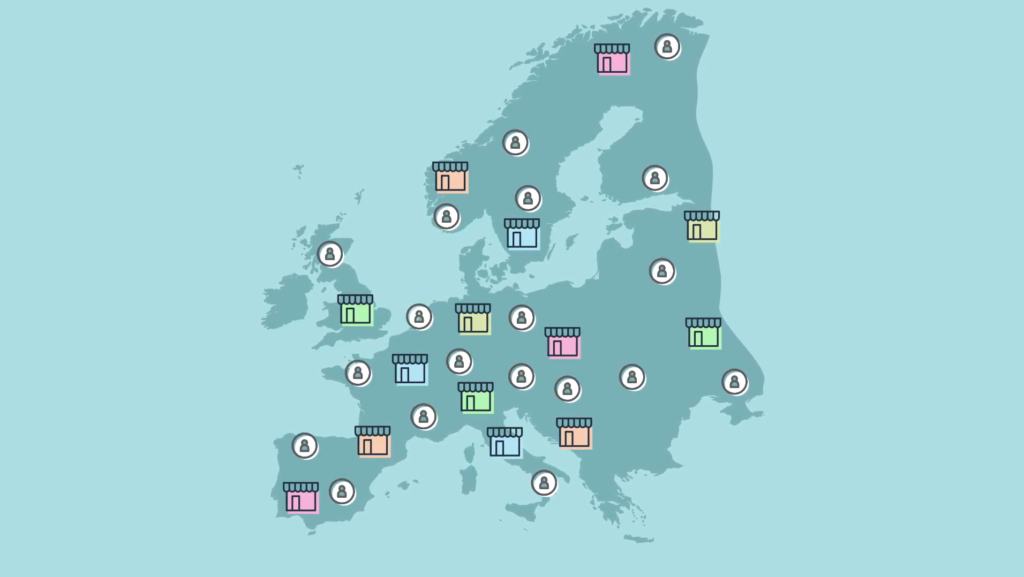
This is different from the European Fulfillment Network (EFN), which keeps your inventory in one participating country and ships every EU order from that single location. EFN reduces how many countries you need to register for VAT in, but it comes with higher per-order fulfillment costs and slower delivery the farther a customer is from your storage hub. Pan-EU FBA trades that simplicity for speed and lower local fees, at the cost of VAT registration wherever Amazon stores your stock.
The five core storage countries are Germany, France, Italy, Spain, and Poland, and your products can reach shoppers in additional European marketplaces beyond those five through Amazon’s wider fulfillment network. The UK is not part of this program, it’s been excluded since Brexit took effect in January 2021, so UK sales still run through a separate setup.
Benefits for US Brands

Enrolling in this program changes three things for a US brand selling into Europe: how fast orders arrive, what you pay per unit, and how much inventory juggling falls on your team across marketplaces.
Faster Delivery and Prime Eligibility
Once your inventory sits in a participating fulfillment center, orders ship from the country closest to the customer instead of crossing a border first. That means shorter delivery windows and automatic Prime eligibility in every marketplace where Amazon places your stock, both of which directly affect conversion rate and Buy Box competitiveness once you’re live on Amazon Europe.
Lower Fulfillment Fees
The program charges local fulfillment rates instead of the higher cross-border rates EFN applies once an order crosses a country line.
According to Amazon’s own Pan-EU FBA handbook, sellers can see savings of up to 53% in fulfillment fees by enabling additional countries for storage, at no extra charge from Amazon for the redistribution itself. That said, the real number depends heavily on your product size, weight, and category, run your own figures through Seller Central rather than assuming the maximum applies to you. For a full breakdown of how Amazon Europe fees stack up across programs, see our Amazon Europe fees for US brands guide.
Simplified Multi-Country Inventory Management
Instead of managing separate inventory pools per country the way Multi-Country Inventory (MCI) requires, this program treats your stock as one pool that Amazon redistributes automatically. You still track a single SKU, and Amazon handles the logic of what to move where based on demand signals, which cuts down the operational overhead of running inventory across five or more marketplaces.
Risks and Trade-offs to Consider
The upside comes with obligations that don’t show up until after you’ve already enrolled, and most of them center on tax and product compliance rather than logistics.
VAT Registration in Every Storage Country
This is the trade-off that catches the most US brands off guard. Pan-EU FBA VAT rules require you to register for VAT in each country where Amazon stores your inventory, not just your home marketplace. Non-compliance may restrict your listings, delay payouts, or affect your selling privileges, so this isn’t a step to postpone until after launch. VAT registration and setup take weeks, and a fiscal representative is generally required in some EU countries, though exemptions exist depending on where your business is established, confirm your specific obligations with a qualified advisor rather than relying on general guidance.
Product Eligibility Restrictions
Not every product qualifies. Categories like medicine, food and beverage items, and hazardous materials are excluded from the program, and eligibility can shift over time even for products that previously qualified. Amazon periodically reviews ASIN status, so a product enrolled today isn’t guaranteed to stay eligible without you checking the eligibility report from time to time.
Compliance and Reporting Complexity
Storing inventory across multiple countries triggers Intrastat reporting and local VAT filing obligations in each of those countries, on top of the initial registration. This is one of the areas where US brands underestimate the ongoing admin load, it’s not a one-time setup cost, it’s a recurring one that shows up every filing period regardless of whether you sold anything in that country that month. Our guide on common Amazon Europe expansion mistakes covers how sellers typically get caught out by this timeline.
Pan-European FBA Requirements and Enrollment Steps
Amazon has specific requirements you need to meet before your ASINs can complete Pan-European FBA enrollment, and getting the order right matters, VAT registration and product listings both need to be in place before Amazon will activate the program.
- Active Professional selling plan: You need a Professional account on Amazon, not an Individual plan, to use FBA at all.
- VAT registration in at least two participating countries: This is the baseline for Pan-European FBA eligibility; you’ll need valid VAT numbers entered in Seller Central for each country where you plan to store inventory.
- Matching listings across required marketplace: Your products need to be listed under the same SKU in each Amazon European store where enrollment applies, Germany, France, Italy, Spain, and Poland are the core storage-enabled countries.
- Product eligibility confirmation: Check the Pan-European Eligibility: FBA ASINs report to confirm your products qualify and aren’t excluded by category restrictions.
- Inventory placement enabled in at least two countries: You choose which countries hold stock; Amazon distributes from there.
- ASIN enrollment activation: Once the above is in place, enroll your eligible ASINs from the Pan-European FBA Inventory page in Seller Central.
Amazon eased some of these requirements in mid-2024, granting exemptions for ASINs with inactive listings due to local language or category restrictions, so if a product doesn’t qualify in one marketplace, it doesn’t automatically block you from the rest. Budget several weeks for VAT registration and listing setup before you plan an actual launch date; rushing this part is where most delays happen.
Who Should Use This Program (and Who Shouldn’t)
Not every US brand is ready for it the moment they launch in Europe, and rushing into it before your volume or compliance setup can support it usually costs more than it saves.
A Good Fit If…
- You’re already shipping consistent volume into Europe and cross-border EFN fees are eating into margin.
- You can commit to VAT registration and ongoing filing in multiple countries without it becoming an afterthought.
- Delivery speed and Prime badge visibility matter for the categories you sell in.
Not a Good Fit (Yet) If…
- You’re still testing which EU marketplaces respond to your products.
- Your VAT setup isn’t in place yet, or you’re not ready to manage multi-country filing.
- Your order volume is low enough that EFN’s simpler, single-registration setup still makes financial sense.
Conclusion
Pan-European FBA or EFN, it isn’t a default choice, it’s a trade you make once your business is ready to absorb the VAT and compliance side of it. For a US brand with steady EU demand and the operational bandwidth to handle multi-country tax registration, the delivery speed and fee savings usually justify it. For a brand still validating the market, starting with EFN and switching once volume justifies the extra registrations is often the more realistic path.
If you’re not sure where your brand fits on that spectrum, book a free Amazon EU expansion consultation and we’ll help you map out the right fulfillment setup before you commit to VAT registrations you don’t need yet.
FAQ
1. What is Pan-European FBA and how does it work?
It’s an Amazon program that stores your inventory across participating European fulfillment centers so orders ship locally instead of crossing borders. You send stock to one center, and Amazon redistributes it based on demand.
2. What are the requirements to enroll in Pan-European FBA?
You need an active Professional selling plan, VAT registration in at least two participating countries, matching product listings across required marketplaces, and eligible ASINs confirmed through the eligibility report.
3. Do I need VAT registration in every country for Pan-European FBA?
Yes, you need VAT registration in each country where Amazon stores your inventory under the program. Non-compliance may restrict your listings or affect your selling privileges, so this should be arranged before enrollment, not after.
4. What’s the difference between Pan-European FBA and EFN?
That’s the core of the Pan-European FBA vs EFN decision: EFN keeps inventory in one country and ships cross-border for every order, while this program distributes stock across multiple countries for local, faster delivery at the cost of VAT registration in each of them.
5. Which countries are included in Pan-European FBA?
The core storage-enabled countries are Germany, France, Italy, Spain, and Poland. Products distributed through the program can reach additional European marketplaces beyond these five as part of Amazon’s participating fulfillment network.