One of the most effective tools to attract the attention of shoppers and promote brand awareness on the marketplace is Amazon Sponsored Brands Video Ads. As video content has become the predominant form of online interaction, these advertisements allow vendors to showcase their products in action within search results.
The guide will take you through all the information you need to know about Amazon Sponsored Brands Video Ads: what they are, how to create them, and the strategies proven to help maximize performance.
What are Amazon Sponsored Brands Video Ads?
Amazon Sponsored Brands Video Ads are eye-catching video advertisements that automatically play and appear directly within Amazon search results, allowing brands to convey their product story in an interactive, engaging, and memorable manner.
Video ads combine movement, sound, and storytelling to attract shoppers’ attention and inspire higher engagement than static ads. According to 87% of marketers, they have seen an increase in lead generation from video content usage, highlighting the power of video in influencing purchase decisions.
Sponsored Brands Video Ads allow sellers to highlight product features, portray practical, real-life usage, and reinforce brand identifiers in just a few seconds. Video Ads increase visibility and maintain a competitive click-through rate and conversion rates within the Amazon marketplace.
| OPPOSITE VIEW: Amazon Sponsored Brands Video Ads require budget, creativity, and strong visuals; without these, videos may get skipped and reduce ROI. |
Guide to Creating Sponsored Brands Video Ads
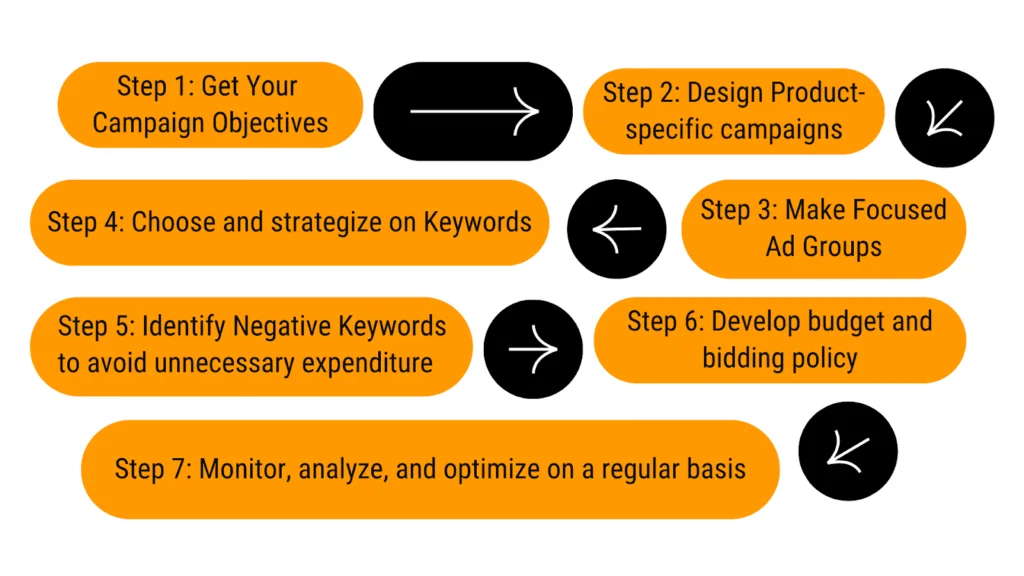
Setting up a Sponsored Brands Video Ad takes only a few steps in the Amazon Advertising Console. Follow the process below to move from campaign setup to a live ad, and then keep improving it once it starts running.
Step 1: Access the Amazon Advertising Console
Start by signing into your Amazon Advertising Console with either your seller account or vendor account. After logging in, go to Campaign Manager and hit ‘Create Campaign.’ From the campaign types listed, select ‘Sponsored Brands’ – specifically a campaign type meant for building brand and product awareness.
Following this, you will then select the ad format ‘Video.’ This will subsequently open the necessary steps to set up your video campaign, including uploading your creative assets, choosing your products, and determining your targeting strategy.
Sponsored Brands Video Ads will appear in Amazon search results, ensuring you have selected all necessary attributes to appeal to high-intent shoppers searching for a similar product.
Step 2: Define Your Campaign Settings
Once you’ve picked a video ad format, you’ll want to set up your campaign settings. First, give your campaign an easy title so you can locate it later. Then, you can set a daily or lifetime budget for the campaign. The campaign can either run continuously or during a specific promotion period.
Then, you will set your targeting strategies. Keyword targeting gives you the ability to show your ads when a shopper is looking for particular terms, and product targeting allows you the opportunity to show your ads beside a similar or competitive product. Next, you will also want to set the bid amount you will pay per click.
If you take your time entering this set of criteria, your Sponsored Brands Video Ads will have the chance to show to the right audience and optimize your advertisement spend.
Step 3: Select the Product to Feature
After you have designed your settings for the campaign, you can select the product (ASIN) to advertise in your Sponsored Brands Video Ad. This is a critical choice, as the ASIN you choose determines how compelling and relevant your ad appears to shoppers.
When you’ve selected an ASIN, Amazon will automatically pre-fill the title, price, star rating, review count, and Prime Eligibility related to the product for viewers to see alongside your video.
To maximize performance, choose a product with a well-optimized listing that includes great images, informative bullet points, and a good number of reviews or star ratings. A product with a solid overall sales history and good reviews will build trust with shoppers and help your click and conversion rate in the future.
When you already have multiple items belonging to the same category, consider the one that is most representative of your brand or best matched with the video message. As an example, when your video is about durability or premium quality, it should be the product that is best matched with these cues.
| IMPORTANT: The first campaign you should run is your most popular or rated product; it is easier to find brand credibility, and the relevance of your video will spread faster in search. |
Step 4: Upload Your Video Creative
It’s time to get your campaign off the ground by uploading video creative. This will be the focal point of your Sponsored Brands Video Ad, so it should look engaging, focus on the product, and meet Amazon’s specifications. Your video should meet the following technical specifications:
- Aspect ratio: 16:9
- Resolution: 1280×720, 1920×1080 (Full HD), or 3840×2160
- Length: 6-45 seconds (15-30 seconds recommended)
- File size: less than 500 MB
- Format: MP4 or MOV
- No black bands, letterboxing, or pillar boxing
Aim to demonstrate your product in action and engage their attention within the first 2 or 3 seconds to help shoppers see your product in use. Great lighting, clear visuals, and telling a concise story really showcase your product features or benefits. Subtle background music or text on the screen may help communicate your message when the sound is off.
Before you finalize, make sure to preview the video for both desktop and mobile. This allows you to consider whether it looks great and ensure that the layout or cropping does not impact the experience.
Step 5: Add Logo and Headline
Once you have uploaded your video, it is time to think about the next part of establishing your brand image, such as the logo and headline. The visual signal that helps the shopper to identify your brand instantly is the logo, and the contextual signal that makes the message interesting is the headline.
Add a high-resolution image of your brand logo (preferably a PNG with a clear background) to a clean appearance that will still have a professional brand image on any device. It is important to remember that your logo must be straightforward and consist of the same story across your brand.
Next up is writing a short, impactful headline (50 characters maximum). Use action-based language that clearly conveys a product benefit or unique selling proposition.
For example, instead of stating “Premium Coffee Beans,” you might consider “Brew like a Barista at Home.” Keep in mind this is next to the video, so headlines should be easy to read and instantly relevant to your target audience.
Step 6: Preview and Submit for Review
Before you submit, preview the complete ad, not only the video. Check how the video, logo, headline, and the product details Amazon pre-fills from your listing appear together on both desktop and mobile placements. Make sure the headline does not repeat what the video already says, the logo is clearly visible, and the price and star rating shown match what you expect shoppers to see.
Once everything looks right, submit the campaign. Amazon reviews every Sponsored Brands Video Ad before it goes live, and this moderation usually takes up to 72 hours. If the ad is approved, it starts running automatically.
If the ad is rejected, Amazon sends an email explaining the reason. Fix every issue mentioned in one pass and resubmit, as each new submission starts another review cycle. For campaigns tied to a promotion or a seasonal event, submit at least a few days in advance so that a rejection does not delay your launch.
Step 7: Monitor and Optimize
As soon as your Sponsored Brands Video Ad goes live, you should not stop there; continuous monitoring and optimization are the secret to long-term success. This is done on your Amazon Advertising Console dashboard to monitor the performance metrics, including impressions, click-through rate (CTR), conversions, and Advertising Cost of Sales (ACOS).
If the level of engagement is low, experiment to see which thumbnails, headlines, or video introductions are more effective. You can also make changes to your bids or targeting, such as allocating more bids to high-performing keywords or refining your audience to focus on shoppers most likely to convert.
It is a good practice to regularly review and optimize your ad so that your campaign budget works effectively and your video continues to produce valuable outcomes. In the long run, these adjustments translate into better brand awareness, increased ROI, and higher product sales rates.
| SUMMARY: Amazon Sponsored Brand Video Ads help increase brand visibility and drive conversions through product-oriented, captivating videos. It is possible to reach high-intent shoppers by setting clear goals, selecting the appropriate ASIN, and continuously optimizing. Regular testing of headlines, thumbnails, and video openings keeps your campaign effective over time. |
The 10 Seconds, 3 Shots, 1 Offer Formula
Knowing how to set up a campaign is only half of the work. The other half is the video itself. Most underperforming Sponsored Brands Video Ads fail for the same reason: they try to say too much. The 10 seconds, 3 shots, 1 offer formula helps you avoid this by giving every video a clear structure before production begins.
10 Seconds
Your video can run longer than 10 seconds to fit the length you planned, but the first 10 seconds should work as a complete ad on their own. Many shoppers scroll past a video ad within a few seconds, so the product, its main benefit, and the reason to click must all appear early.
A useful check is to ask what a shopper should remember if they watched only the first 10 seconds. If the answer is not clear, the opening needs to be shortened or reordered.
3 Shots
Within those 10 seconds, use three distinct shots. Three is enough to tell a short story without overwhelming the viewer:
- The hook: a striking visual, an unexpected action, or a question about a problem the shopper already has, so that they stop scrolling.
- The product or benefit: the product in use, with the one feature that matters most shown clearly.
- The result and call to action: the outcome of using the product, such as a before-and-after, followed by one clear reason to buy now.
Each shot should be able to carry the core message on its own. If a shopper saw only one of the three, they should still understand what you sell and why it matters.
1 Offer
Every video should end with one offer only. This can be a discount, a bundle, or a simple invitation to view the product. Several promotions in one video compete with each other and leave shoppers unsure of what to do next.
IMPORTANT: If your offer mentions a discount or deal, make sure the promotion is active for the entire time the campaign runs, and check the claim against Amazon’s creative acceptance policies before submitting. A price claim that does not match the product detail page is a common reason for an ad to be rejected.
Planning the Script Before You Shoot
A 10-second video leaves no room for improvisation, so the script should be written before filming starts. A short planning process keeps every shot tied to one purpose.
Set One Measurable Goal
Decide what the video should achieve before you think about visuals. Building brand awareness, explaining the product’s value, and driving immediate purchases each lead to a different script.
The goal should also be measurable. Instead of aiming for “more clicks,” set a target such as increasing detail page visits by 20% over one week. A specific goal makes it easier to judge each shot, and it gives you a benchmark when you review results in the Advertising Console.
Write One Line per Shot
Keep the script to one idea per shot, and write it in the simplest words possible:
- Hook line: a question or bold statement that names the shopper’s problem.
- Feature line: the product’s value in plain terms.
- Offer line: exactly what the shopper should do next.
Read together, the three lines should answer what the product is, why the shopper wants it, and how to get it. A script without the last line may still collect views, but it rarely turns them into sales.
Match Visuals and Audio to the Product
Visuals should be clean and focused on the product, without busy backgrounds or complex scenes that shoppers have no time to process. Audio should match the tone of the brand and the category: energetic music suits fitness products, a calm and warm track suits home goods, and a clean, minimal sound suits technology.
A voiceover is optional, and many effective videos rely only on visuals and on-screen text. Test the final cut twice, once with the sound off and once with it on. It should make complete sense without sound and feel stronger with it.
Common Creative Mistakes in Sponsored Brands Video Ads
Even a well-planned video can waste its budget because of small creative mistakes. These are the issues worth checking before you upload.
Choosing Creativity Over Clarity
Cinematic shots and fancy transitions can look impressive, but if shoppers cannot tell what the product is within the first two seconds, the video has already missed its purpose. Pick the single most important point of value and build the video around it, rather than trying to mention every feature.
Designing for Desktop Instead of Mobile
According to eDesk, 53% of Amazon’s website traffic comes from mobile devices, where small text, wide panoramic shots, and crowded scenes are easily lost. Make sure the hero product fills the frame, the on-screen text can be read on a phone, and the offer stays visible on a small screen. The mobile preview in Step 4 should check these details, not only the cropping.
Overloading the Screen With Text
Text overlays help retention when they are short. A phrase such as “Made for Sensitive Skin” can be understood in a single glance, while a full sentence cannot. Limit each shot to one message and remove any text a shopper could not read at a glance.
Leaving the Next Step Unclear
Shoppers should never have to guess what to do after watching. End with a direct call to action, such as “Shop Now” or “See All Variants,” so the video has a clear direction. When the next step is unclear, most viewers take no action at all.
Conclusion
Amazon Sponsored Brands Video Ads provide the sellers with an interactive opportunity to reach out to customers and to achieve better brand recognition directly in the Amazon search index. The incorporation of movement, storytelling, and sound makes these ads more prominent and effective in their ability to influence purchase intent compared to a static image.
In case of the most effective outcomes, it is important to concentrate on the clarity of messages, the power of images, and constant optimization. With competition on Amazon increasing, brands using video advertising get a quantifiable advantage in visibility, interaction, and customer trust in the long term.
FAQs
1. What are Amazon Sponsored Brands Video Ads?
Sponsored Brands Video Ads are short, autoplay videos displayed directly in Amazon search results. They allow sellers to demonstrate product use cases, showcase important features, and increase brand awareness through storytelling and compelling visuals.
2. How long should a Sponsored Brands Video Ad be?
Amazon accepts videos between 6 and 45 seconds, but 15 to 30 seconds is generally recommended. In a few seconds, the video should engage your audience, showing a video of a product in use, if possible, which ends with a strong brand message or call to action.
3. How do I increase my video ad performance?
When viewed in aggregate, the main metrics to watch are CTR, ACOS, and conversion rate, and all optimization should be based on performance. You should test different headlines, thumbnails, and video openings, and focus on keywords that performed the best.