Most Turkish manufacturers come from a wholesale world: bulk shipments, distributor deals, margins set once a year. That’s why the Amazon Vendor Central vs Seller Central choice trips people up the first time they expand into Europe or the UK. Amazon doesn’t offer one model, you either supply wholesale or run your own storefront.
Pick wrong and it costs you. Default to Vendor Central without checking payment terms, and you’re floating 60-90 days of inventory costs. Open Seller Central without prepping for VAT and EORI, and you’re buried in compliance work fast.
This guide breaks down the Amazon Vendor Central vs Seller Central decision for manufacturers based in Turkey expanding into the EU and UK, where the rules work differently than in the US.
Why This Decision Matters More for Turkish Manufacturers Entering Europe
Manufacturers based in Turkey already run a B2B supply chain: factories, distributors, export contracts. Amazon looks similar on the surface, but it isn’t. Choosing Amazon Vendor Central means slotting into that familiar wholesale relationship, selling in bulk at negotiated prices while Amazon handles the retail side entirely. Choosing Seller Central means running a direct-to-consumer operation on a platform you don’t control, with all the pricing, advertising, and customer service work that comes with it.
The market context matters too. Third-party sellers accounted for 61% of worldwide paid units in Q2 2026, according to Amazon’s own reported figures tracked by Statista, a sign that the Seller Central side of the marketplace has grown into the dominant model, not a fallback option. Manufacturers weighing Amazon Vendor Central vs Seller Central today are choosing against that backdrop, not the retail-dominant Amazon of a decade ago.
For Turkish manufacturers, Amazon Europe is rarely a simple copy-paste of the US playbook. Practical questions come up that the US market doesn’t raise the same way: which entity sells into which country, how VAT registration is handled, and how fulfillment differs across borders. Amazon operates differently market to market in the EU and UK, and understanding the US vs EU differences before picking a selling model saves a lot of rework later. A manufacturer selling kitchenware in Germany faces different category rules and VAT triggers than one selling electricals in the UK, and the selling model you choose interacts with all of it.
Amazon Vendor Central vs Seller Central: The Core Differences
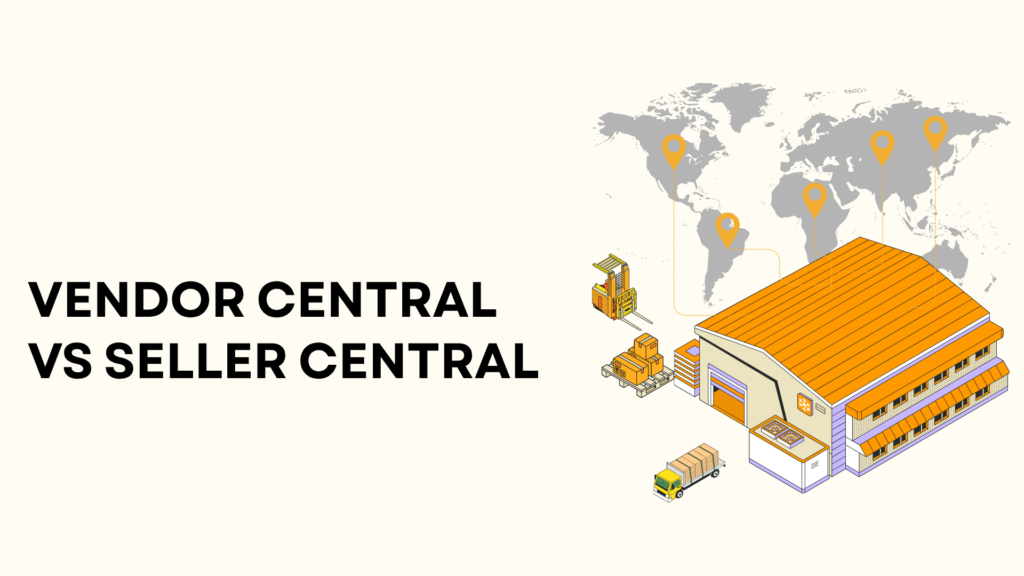
Both sides of the Amazon Vendor Central vs Seller Central decision sit on the same platform, but they diverge on how you get in, how you get paid, and how much control you keep. Here’s what actually changes under each one.
How Each Model Works
Amazon Vendor Central is the purest form of the 1P vs 3P Amazon split: you become Amazon’s supplier of record. Amazon issues purchase orders, buys inventory from you at wholesale prices, then resells it under “Sold by Amazon.com.” Access is invitation-only. Amazon’s vendor recruitment team reaches out based on sales history, category fit, and brand strength, and there’s no public application to speed that up.
Amazon Seller Central puts you on the third-party seller side instead. You list your own products, set your own prices, and either fulfill orders yourself or use Fulfillment by Amazon. Businesses can register for Seller Central without an invitation, subject to Amazon’s registration and category requirements, which is why most manufacturers start here by default, then consider Vendor Central later if Amazon extends an invite.
Margins and Payment Terms
The biggest difference often comes down to margins and cash flow. Vendor Central typically involves negotiated wholesale pricing, with payment terms that can commonly extend to 60–90 days depending on the vendor agreement. That’s a long cash-flow gap for a manufacturer already carrying production and shipping costs before the first payment lands.
Seller Central keeps retail-level margins in your hands, since you set the price the customer actually pays. Amazon takes a referral fee per sale instead of buying inventory outright, and payouts land on a standard, much shorter Amazon payment cycle rather than a 60–90 day wait. For manufacturers managing tight working capital during a new market launch, this difference alone often settles the decision.
Control Over Pricing, Brand, and Customer Data
Vendor Central hands pricing control to Amazon. If Amazon decides your product needs to be cheaper to win the Buy Box against a competing listing, that’s Amazon’s call, not yours. You also lose direct access to customer reviews context and shopper data beyond what Vendor Central reporting shows you.
Seller Central keeps brand control with you. You manage the listing content, run your own advertising, and can use Brand Registry tools to protect your catalog from unauthorized resellers. For manufacturers trying to build a recognizable brand in Europe rather than just move inventory, this control matters more than it typically does in a domestic wholesale relationship.
| Factor | Amazon Vendor Central | Amazon Seller Central |
| Access | Invitation-only | Open registration |
| Relationship | Wholesale supplier to Amazon (1P) | Direct seller to customers (3P) |
| Pricing control | Amazon sets the retail price | You set the retail price |
| Margin type | Wholesale margin | Retail margin |
| Payment terms | Can extend to 60-90 days | Standard, shorter payout cycle |
| Brand control | Limited | Greater control, including access to Brand Registry and A+ Content |
| Best fit | High-volume, established manufacturers | Growing brands that want control |
Fulfillment and Operational Responsibilities
Vendor Central shifts almost all operational weight onto Amazon. Once your purchase order ships, Amazon owns storage, customer service, returns, and delivery. Your team’s job shrinks to production planning and fulfilling POs on time, which suits manufacturers who don’t want to build an in-house ecommerce operation.

Seller Central puts that operational weight back on you. You choose between Fulfillment by Amazon, where Amazon stores and ships your inventory for a fee, or Fulfillment by Merchant, where you handle shipping yourself. FBA can simplify logistics for a Turkish manufacturer new to European operations by letting Amazon handle storage, packing, and delivery, though you still need to assess the VAT and customs implications of where your inventory ends up stored.
Common Mistakes Turkish Manufacturers Make When Choosing
Manufacturers get the Amazon Vendor Central vs Seller Central decision wrong in a few predictable ways:
- Treating a Vendor Central invitation as automatic validation: Getting invited feels like an achievement, but vendor agreements can involve extended payment terms and limited pricing control, which can pressure cash flow right when it matters most during EU market entry. Some manufacturers accept the invitation without ever modeling what that delay does to working capital.
- Underestimating the operational lift of Seller Central: Running your own storefront means taking responsibility for VAT and customs requirements, which can include VAT registrations and EORI numbers depending on your fulfillment and import setup, along with advertising and customer service across multiple EU marketplaces plus the UK. Manufacturers who treat this as “just like Seller Central in the US” often get caught by compliance requirements that don’t exist domestically.
- Applying a US playbook to a European decision: Vendor Central invitation thresholds, category priorities, and even the way manufacturers approach Amazon’s B2B selling model look different across Amazon’s EU marketplaces than they do in the US. Getting an outside assessment of which model actually fits your product category and volume, through an Amazon consulting engagement, usually surfaces trade-offs a manufacturer evaluating this alone would miss.
- Picking a model in isolation from category rules: Product categories like health and beauty, electricals, or toys carry certification and safety requirements that can shift depending on whether Amazon or your own account is the seller of record. Manufacturers who choose Vendor Central or Seller Central purely on margin, without checking how compliance obligations move with it, often discover the gap only after a listing gets flagged.
Which Model Fits Your Business
There’s no universal answer to Amazon Vendor Central vs Seller Central. The right model depends on volume, cash flow tolerance, and how much brand control matters to you. Use the breakdown below as a starting point, not a final verdict.
| If your priority is… | Lean toward… |
| Predictable bulk orders with less day-to-day work | Vendor Central, if invited |
| Full pricing control and faster cash flow | Seller Central |
| Building a recognizable brand in the EU and UK | Seller Central |
| High volume with an established retail presence | Vendor Central |
| Testing a new market before committing further | Seller Central |
Most Turkish manufacturers entering Europe for the first time are better served starting on Seller Central. It gives you direct market feedback, avoids the invitation-only gate, and keeps cash flow manageable while you learn how EU and UK buyers actually behave before scaling further.
A growing number of manufacturers also run a hybrid setup once they’ve been on Amazon for a while, keeping high-volume, established products on Vendor Central while testing newer or seasonal items on Seller Central. It isn’t the right starting point for a first launch, but it’s worth keeping in mind as your catalog and your Amazon relationship mature.
Conclusion
Amazon Vendor Central vs Seller Central comes down to control versus convenience. Most manufacturers new to Amazon Europe do better starting on Seller Central: no wait for an invitation, retail-level margins, and room to build the sales history that could earn a Vendor Central invite later. Vendor Central still fits manufacturers with high-volume retail relationships who want Amazon to run like another big-box account, but it’s rarely the right fit for a first move into a new region.
Whichever model you choose, ongoing management still takes real work, from catalog upkeep to advertising, covered under full account management. For a second opinion on your fit, book a free consultation and we’ll walk through your category, volume, and EU/UK goals.
FAQ
1. What’s the difference between Amazon Vendor Central and Seller Central?
The core Amazon Vendor Central vs Seller Central difference is who does the selling. Vendor Central makes you a wholesale supplier who sells in bulk directly to Amazon, which then resells to customers under its own name. Seller Central makes you a direct seller who lists, prices, and markets your own products to Amazon customers.
2. How do you get invited to Amazon Vendor Central?
Amazon extends Vendor Central invitations based on sales history, category fit, and brand strength, and there’s no public application process. Most invited manufacturers already have a strong track record selling through Seller Central or another retail channel first.
3. Is Vendor Central or Seller Central more profitable for manufacturers?
Seller Central generally offers better margins since you control pricing and keep retail-level revenue per unit. Vendor Central offers wholesale pricing in exchange for Amazon handling the retail side of fulfillment and customer service, while vendors can still invest in Amazon advertising and other marketing programs.
4. Can a manufacturer use both Vendor Central and Seller Central at once?
Yes, this hybrid approach is fairly common. Manufacturers often keep best-selling products on Vendor Central for volume while using Seller Central for newer or seasonal items that need more pricing flexibility.
5. Do Turkish manufacturers need a local entity to sell on Amazon Europe or UK?
Requirements vary by marketplace, fulfillment method, and product category, so this depends on your specific setup. It’s worth confirming VAT and entity requirements for each target country before launching, since EU and UK rules differ from each other.