Brand Amazon Registry is a great way to build customer trust, cultivate your brand image, and increase sales. We discuss what sellers need to know about Amazon Brand Registry, how to get started, its benefits, and more in this guide!
What is Amazon Brand Registry?
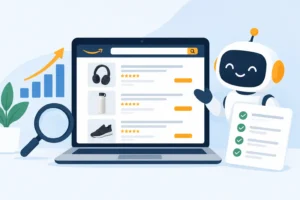
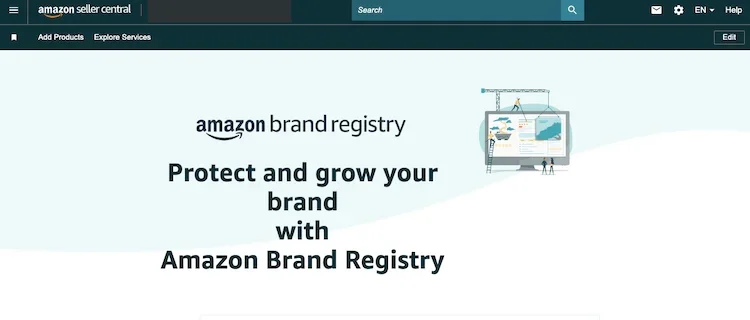
Amazon Brand Registry is a free service that Amazon provides businesses. Brand Registry helps business to protect their intellectual property (IP), improve the quality of their listings, and grow their storefronts. Sellers who enroll in the program can access a range of tools and services to manage their brand identity, such as:
- Search and report tools to find and report potential infringements of their brand rights by other sellers.
- Brand building features to customize their brand store, product detail pages, and sponsored ads with their own logo, images, and videos.
- Brand analytics to monitor their brand performance, customer behavior, and market trends.
Benefits of Amazon Brand Registry
Access to advanced analytics and advertising options
When you register your brand with Amazon, you’re given access to advanced analytics and advertising options like A+ content, Amazon brand sponsors, storefronts, product videos, Subscribe and Save, and more.
Accurate representation of your brand
Amazon Brand Registry allows you to protect and represent your brand for what it is, without allowing others to infringe upon your brand representation with fake logos and bad listings.
Tools to find and report violations
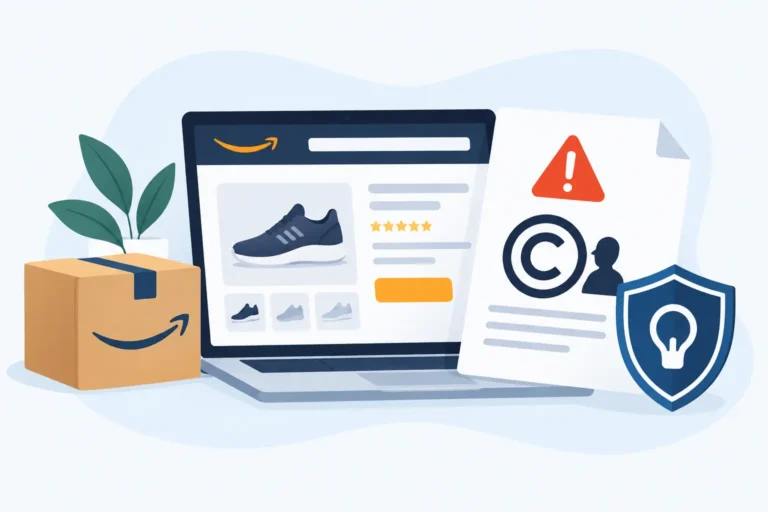
Amazon helps you find IP violations and provides tools to help you spot, report, and remove violations before they reach customers.
Preventing infringement and protecting intellectual property
Amazon searches thousands of listings to protect your intellectual property from infringements or inaccurate information.
Creating a trusted customer experience on Amazon
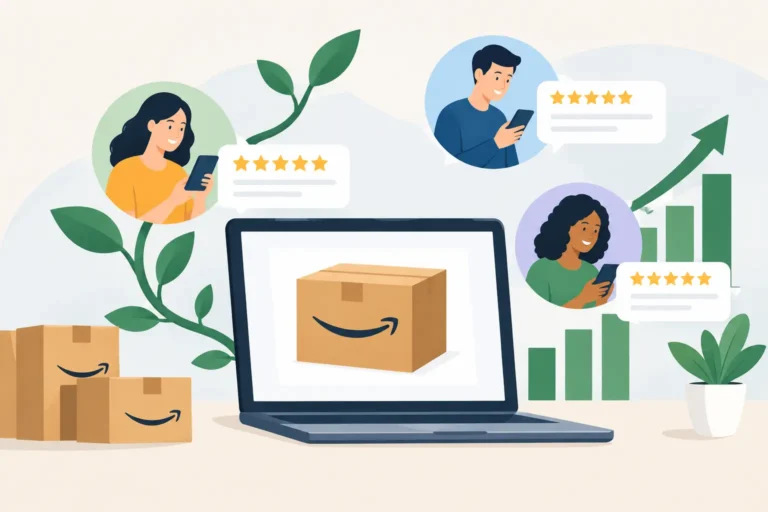
When your products are branded, you create a customer base that trusts the quality of your products and service.
Sole ownership of the “Amazon Buy Box”
One of the benefits of the Amazon brand registry is the opportunity to win the “Amazon Buy Box”, which is the featured offer that appears on the product detail page. Only one seller can be featured in the Buy Box at a time, and Amazon uses a complex algorithm to determine who gets it. Some of the factors that influence the Buy Box are price, availability, shipping speed, customer feedback, and seller performance.
Brand Amazon Registry: Key Features and Tools
Brand Analytics for search terms and ASIN performance
Brands can see analytics for search terms related to their products, demographic reports about your audience, and item comparison reports to see which ASINs are being compared before a customer buys a product, the most-clicked ASINs, and the second most-clicked ASINs.
Market Basket Analysis for cross-selling opportunities
Amazon gathers data on which products are often bought together by customers. This information lets sellers recognize opportunities for bundles and advertising opportunities for their stores.
Item Comparison and Alternate Purchase Behavior insights
Get the top 5 products customers click on after clicking on your products to see what they’re buying (and why they’re not buying from you).
Amazon Attribution for tracking advertising performance
See which ads are performing the best and which are flopping.
A+ Listing Creation for enhanced product descriptions
A+ content lets brands enhance their listings with comparison charts, high-def images and videos, text, and other design elements.
Eligibility for Brand Registry
Requirement for a pending or registered active text-based or image-based trademark
According to Amazon, “Brands must have a pending or registered and active text-based or image-based trademark” to be eligible for brand registry on the platform.
Eligibility for brands with registered trademarks or pending applications through Amazon IP Accelerator
Businesses enrolled in the Amazon IP Accelerator get faster access to Amazon Brand Registry benefits and IP law firm services.
Country-Specific Requirements
Amazon currently only accepts trademarks from governments in the following countries:
- United States
- Canada
- Brazil
- Australia
- Mexico
- Japan
- India
- Germany
- France
- Turkey
- Italy
- Spain
- Singapore
- United Kingdom
- Saudi Arabia
- Sweden
- Egypt
- Benelux
- Poland
- United Arab Emirates
- European Union
Visit this page to view country-specific requirements.
Brand Registry Enrollment
Steps to enroll a brand:
- Provide brand name with active registered or pending trademark.
- Submit images depicting the trademark on products or packaging.
- Include trademark registration number (pending application if applicable).
- Select product categories for brand listing.
Activation and Verification
Once you submit your application, wait for Amazon to review it. This may take up to 10 business days. Once your application is approved, you will receive an email with a verification code. Enter the code in the Brand Registry section of your Seller Central account to complete the activation process. After that, you can enjoy the benefits of having a registered brand on Amazon.
Protecting Your Brand
Amazon Brand Registry helps you protect your brand and prevent product hijacking. Product hijacking on Amazon is a malicious practice where unauthorized sellers list counterfeit or low-quality products under a legitimate product’s ASIN (Amazon Standard Identification Number). This way, they can take advantage of the product’s existing reviews, ratings, and sales rank, and deceive customers into buying their inferior products. Product hijacking can damage the reputation and revenue of the original seller, as well as harm the customer experience and trust in Amazon.
Brand Registry gives you the tools, but someone has to use them week after week – watching who appears on your listings, filing the reports and keeping the content yours. That ongoing work is what we do as a brand control and authorised distribution partner.
What Brand Amazon Registry Changes in Your Listings and Ads
The features above are the ones most guides list. Once you are enrolled, a few other changes show up in Seller Central that matter just as much in everyday selling.
More control over your product detail pages
After enrollment, Amazon gives your edits to titles, bullet points, images and A+ content more weight than changes from other sellers on the same ASIN. Without it, anyone selling on your listing can push through a swapped image, rewritten bullets or a different title, and each of these can hurt both your branding and your conversion rate. With Brand Registry, your version becomes the reference when content conflicts, and you have a much faster route to get a wrong change reversed.
Extra brand-building tools
Besides A+ content and storefronts, registered brands can add a Brand Story module, move up to Premium A+ once eligible, publish Amazon Posts, and upload videos directly to the listing. Amazon says basic A+ content alone can lift sales by up to 8%.
Manage Your Experiments lets you A/B test titles, main images and A+ content, so changes are based on results rather than opinions. Your Brand Store then gives shoppers one place to browse your whole range.
Sponsored Brands and Sponsored Display
Sponsored Brands, including Sponsored Brands video, are only available to brand-registered sellers. Registration also opens Sponsored Display, which lets you retarget shoppers who viewed your products or similar ones, and Brand Metrics, which shows how your brand performs on awareness and consideration. Without Brand Registry, you are mostly limited to Sponsored Products.
Search Query Performance and Repeat Purchase reports
Brand Analytics also includes Search Query Performance (SQP). For each search query, it shows the total search volume and what share of impressions, clicks, add-to-carts and purchases your brand captured. The Repeat Purchase Behavior report shows which of your products customers come back to buy again.
Project Zero and Transparency: Extra IP Protection
Brand Registry is also the entry point to two programs that go further than standard reporting.
Project Zero
Project Zero lets eligible brands remove counterfeit listings themselves, without waiting for Amazon to review each report. Amazon also uses the brand information you provide, such as logos and trademarks, to scan listings automatically for suspected counterfeits.
Transparency
Transparency gives every unit you produce a unique code. Amazon checks the code before an order ships, so units without a valid code don’t reach customers, and shoppers can scan the code themselves to confirm the product is genuine.
Faster handling of violation reports
Reports filed through Report a Violation are handled with priority once you’re enrolled. Brand Registry does not stop every hijacker, but brands usually get quicker responses and more successful outcomes, especially with unauthorized sellers and incorrect listing edits.
How to Use Brand Registry Day to Day
Registering your brand is a one-time task. Getting value from it is an ongoing routine. Here is how most brands build Brand Registry into their daily, weekly and monthly work.
Daily protection check
Start each day by checking your top ASINs. Look for new sellers on the listing and watch your Buy Box percentage, because even a small drop can be the first sign of a hijacker or an unauthorized reseller. When you find one, collect screenshots, the ASIN and the seller name, confirm the violation, and then file it through Report a Violation. If you use Transparency, review the scan reports at least once a week.
Content testing and refresh
With Brand Registry, content becomes something you improve continuously rather than set once. Keep at least one experiment running in Manage Your Experiments, and use the results to improve click-through and conversion rates step by step.
Many brands also refresh their key assets every 30 to 45 days: new lifestyle images, updated infographics, clearer bullet points, or a short how-to or unboxing video. Since your edits take priority, these updates go live more smoothly and stay protected from unauthorized changes.
Weekly Brand Analytics review
Once a week, go through the main reports and turn each one into an action:
- Search Query Performance: check how much of the demand for your key queries you capture. If an important query is weak, work on the title, images, A+ content or bids for that query.
- Market Basket Analysis: if shoppers often buy your product with another item, consider a bundle, a cross-promotion or an A+ module that shows the pairing.
- Repeat Purchase Behavior: products with strong repeat rates are good candidates for Subscribe and Save, loyalty coupons or remarketing. A low repeat rate can point to a problem with the product experience or its positioning.
- Demographics: use what you learn about your buyers to adjust ad targeting, messaging and lifestyle images.
Connecting ads to your Brand Store
Brand Registry lets you build an ad system where each format has its own job. Sponsored Brands headline ads that send traffic straight to your Brand Store tend to bring higher order values than ads that land on a single listing. Sponsored Brands video builds trust, and Sponsored Display brings back shoppers who viewed your product but didn’t buy.
Launch workflow
Brand Registry makes product launches more controlled. A typical sequence looks like this:
- Create a dedicated sub-page in your Brand Store for the new product, so ads have a branded landing page from day one.
- Prepare A+ or Premium A+ content before launch and publish it as soon as the listing is live.
- Start Sponsored Brands video campaigns at launch to build sales velocity, one of Amazon’s strongest ranking signals.
- Review Search Query Performance during the first weeks and adjust targeting, content or bids if your key queries aren’t climbing.
If you sell in Europe, Brand Registry is only the first item on a longer list. The full sequence is in our Amazon EU compliance guide.
Building a Full Brand Protection Stack
Brand Registry is one layer of protection, not the whole system. Amazon reports that it detected, seized and disposed of more than 15 million counterfeit products worldwide in 2024. A trademark gives you legal ownership, and Brand Registry gives you tools, but keeping fakes and unauthorized sellers away takes three layers working together: content, PPC and legal action.
Content that helps shoppers spot the real product
The more complete your listing is, the harder it is for a copycat to confuse your customers. Strong protective content includes:
- Exact specifications, such as dimensions, weight and materials.
- Photos from several angles, close-ups of key details, lifestyle shots and demonstration videos.
- Details that counterfeiters struggle to copy, such as packaging, labels, material quality and verification codes.
- Clear reasons to choose the genuine product, such as durability, warranty and after-sales support.
- Usage guides and answers to common questions.
Keep this content up to date. When you add new models, colors or improvements, older copied listings stand out as outdated.
PPC that keeps your brand searches yours
Competitors can bid on your brand name and take shoppers who were already looking for you. To protect that traffic:
- Bid on your own brand keywords. These clicks are usually cheap and come from shoppers with high purchase intent.
- Check regularly who is targeting your brand terms, and adjust bids or budgets to stay at the top.
- Add negative keywords so your budget isn’t spent on unrelated searches.
- Use ad copy that makes clear you are the official source, with guarantees and genuine-product benefits.
- Review and refine your campaign structure on a regular schedule.
Legal actions for repeat offenders
When reports on Amazon aren’t enough, legal tools give you a formal way to enforce your rights:
- Cease and desist letters: a formal notice to stop using your brand, which settles many cases before they reach court.
- Trademark infringement lawsuits: for repeated violations, where you may also recover damages.
- Customs enforcement: in the EU, you can file an application for action with customs authorities so counterfeit goods are stopped at the border.
- Online takedown requests: Report a Violation on Amazon, plus equivalent tools on other marketplaces and websites.
- Licensing and distribution contracts: written agreements that define who may sell your brand and what happens when the terms are broken. These are your strongest tool against unauthorized sellers.
Which layer to start with
Start with content, because it’s the fastest way to reduce customer confusion. Add PPC to protect high-intent brand traffic, and use legal action for long-term enforcement against repeat offenders.
What a Hijacker Really Costs You
Hijacking costs more than a few lost orders. Research from Georgetown’s KGI estimates that up to 98% of Amazon sales go through the Buy Box, so a hijacker who undercuts your price and takes it can cut off most of your revenue on that ASIN. Customers who receive a knockoff leave one-star reviews on your listing, not the hijacker’s, and your conversion rate keeps suffering long after that seller is gone.
Brand Registry lowers this risk in two ways. Amazon says enrolled brands report, on average, 99% fewer suspected infringements, because many counterfeit and abusive listings are blocked before you need to file a complaint. And while you still compete on price, fulfillment and performance, sellers with inconsistent behavior or poor metrics are less likely to rotate into the Buy Box. Running FBA with strong seller metrics keeps your position more stable.
Getting Your Brand Registry Application Approved
Most rejected applications don’t fail on the trademark itself. They fail on small details that don’t line up. Check these before you submit.
Match the brand name exactly
Amazon compares your brand name with the trademark character by character. If the trademark reads “YangYang”, then “Yang Yang” or “YangYang™” counts as a mismatch. Before applying, make sure titles, bullet points, the backend brand field, packaging and product images all use the same spelling, spacing and punctuation.
Make ownership clear
The simplest case is when you own the trademark yourself. If you sell under a trademark that belongs to another party, you need a written authorization from the owner that clearly states you may sell the brand’s products on Amazon. Generic or vague letters are a common reason for rejection.
Show the brand permanently on product and packaging
Your brand name must be permanently printed or affixed on both the product and its packaging. Removable stickers, peel-off labels and plain unbranded boxes are not accepted, and Amazon wants real photos rather than mockups. For private label sellers, this usually means printing the brand on the product or ordering custom packaging from the factory.
Know who receives the verification code
The verification code goes to the contact on the trademark record, which is the trademark owner or the law firm that filed it, not automatically to your Seller Central email. Tell that person or firm to expect the email, because the code expires if it isn’t confirmed in time. An account email on your brand’s own domain also helps avoid verification issues.
How Long Brand Registry Takes
If your documents are in order, most brands get through the whole process in two to three weeks:
- Preparing documents: 3 to 7 days to gather trademark details, align the brand name and take product and packaging photos.
- Amazon’s review: 7 to 14 days to check the trademark, the brand name and the images.
- Verification code: 1 to 3 days, as long as the trademark contact responds quickly.
Three things usually slow it down. Trademarks from USPTO, EUIPO or UKIPO tend to go through smoothly, while lesser-known offices can trigger extra checks. Brand names that resemble an existing brand or use generic terms may go to manual review. And if Amazon suspects stickers or edited mockups, it asks for new photos, which resets part of the clock.
Giving Distributors and Partners Access
Once your brand is approved, you decide who else can work on it. Brand Registry lets you assign roles, such as content management, reporting or brand protection, without handing over full account access. This matters if you run several seller accounts for different regions or subsidiaries, or if distributors and agencies manage parts of your catalog. You keep ownership of the brand, and each partner gets only the access their work needs.
FAQs
1. Is Amazon a brand or company?
Amazon is a tech company that specializes in e-commerce, streaming, and tech solutions. Though, Amazon does sell its own branded products.
2. What are Amazon products examples?
Amazon products include books, apparel, electronics, beauty and personal care products, kitchen and home products, food, lawn and garden products, and more.
3. How important is a brand on Amazon?
A brand isn’t necessary to drive sales on Amazon, but having a recognized and trusted brand can help gain the trust of customers and increase profits.
Conclusion
Registering your brand with Amazon helps to protect your intellectual property, grow your customer base, and increase profits. Getting started is free and worth the plunge for established sellers!